

Picasso never painted in the same way twice. Perhaps that is one of the best ways to approach him. Not as the man who invented a particular way of painting, nor as the artist who one day decided to break the rules forever, but as someone who seemed to have an almost permanent need to change the way he looked at the world.
He was born in Málaga in 1881 and died in France in 1973. Between those two moments lie many lives: the young man who arrived in Paris, the artist who experienced poverty and bohemian life, the man who turned his loves into paintings, the creator who dismantled bodies and faces, and the artist who responded to war with one of the most powerful images of the 20th century. Between one life and another, Picasso kept changing his skin.
First came the sadness
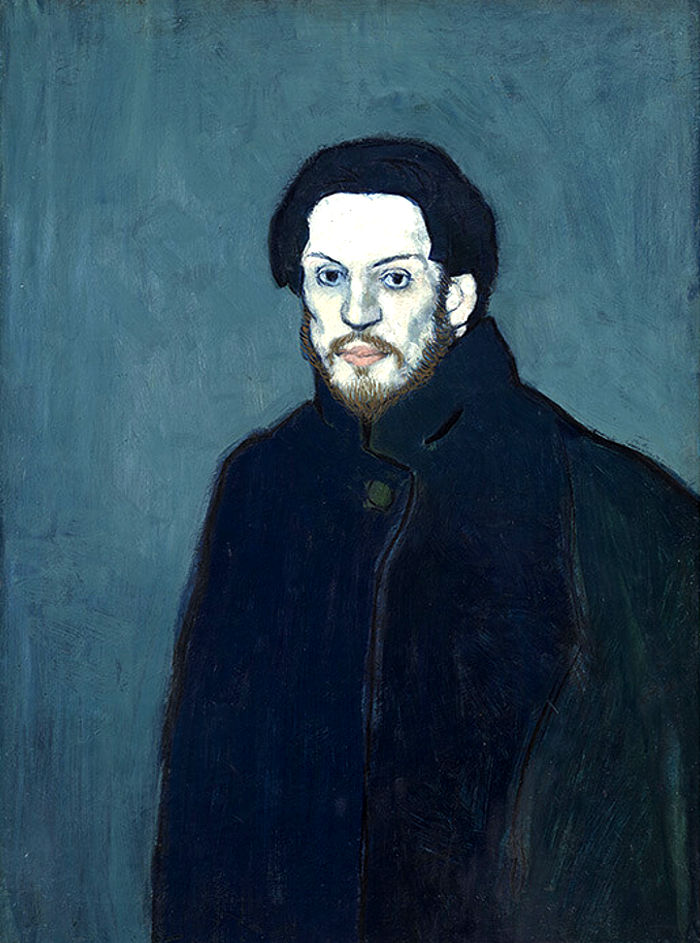
At first came sadness, dressed in blue. Between 1901 and 1904, during what we know as his Blue Period, his paintings filled with poor, lonely, and silent figures. Blue was not simply a color Picasso chose because he liked it. It became the emotional climate of those paintings.
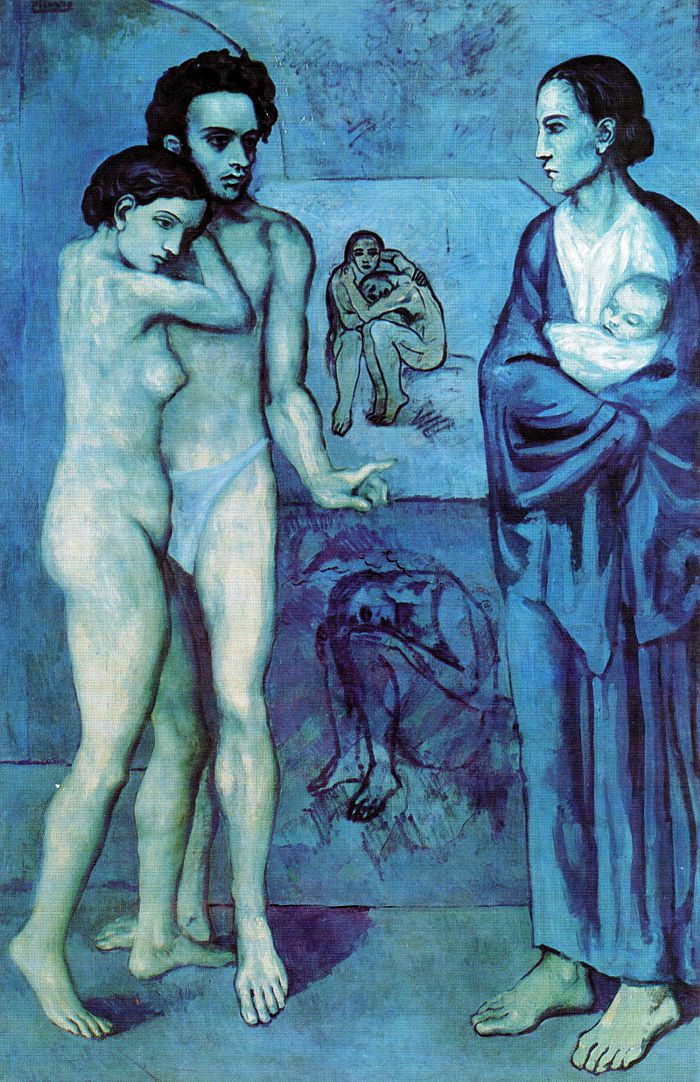
In La Vie, from 1903, everything seems frozen. The figures draw close to one another, yet something keeps them apart. It is a painting filled with melancholy, one of those paintings that seem to hold a conversation we never get to hear. Picasso was still searching for his place.
In 1904 he settled permanently in Paris. He was young, a foreigner, and still far from being the Picasso we know today. He lived among artists, writers, and people who also found themselves on the margins of society. It was not surprising that he began to look toward them.
Then came the acrobats. The colors changed. Blue began to retreat, and pinks, ochres, skin tones, and the costumes of circus performers appeared. But the sadness did not disappear completely.
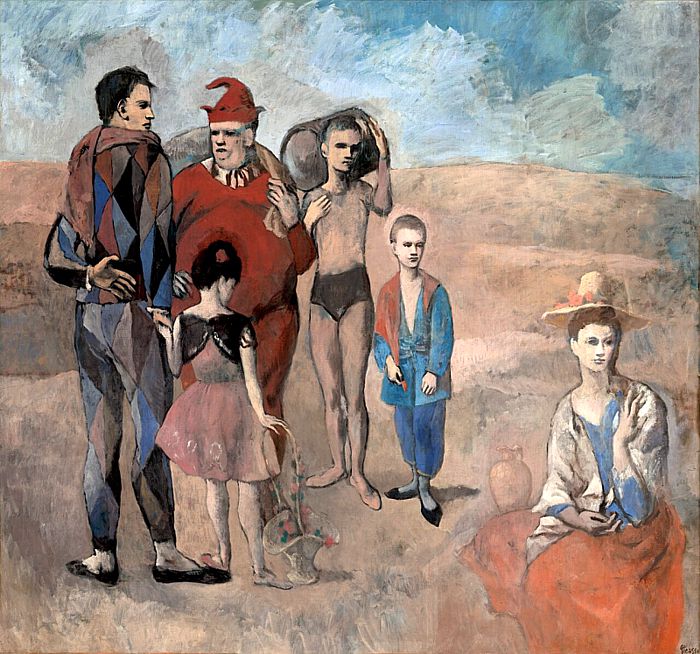
In Family of Saltimbanques, from 1905, Picasso brought several of these characters together in an empty landscape. They are acrobats, dancers, and figures from the commedia dell’arte. And there is an extraordinary detail: the young harlequin on the left has Picasso’s own face. The National Gallery of Art specifically points to this identification of the artist with those characters who lived on the margins, something Picasso knew well during his early years in Paris.
What is curious is that the painting is called Family, yet almost no one seems to be truly with the others. They do not look at one another. They do not speak. Each one seems enclosed in their own thoughts. Picasso was changing color, but he was still talking about loneliness.
Then he decided to take the world apart
And then something happened that would change the history of art. Picasso stopped wanting to paint the world as his eyes saw it. He wanted to take it apart.
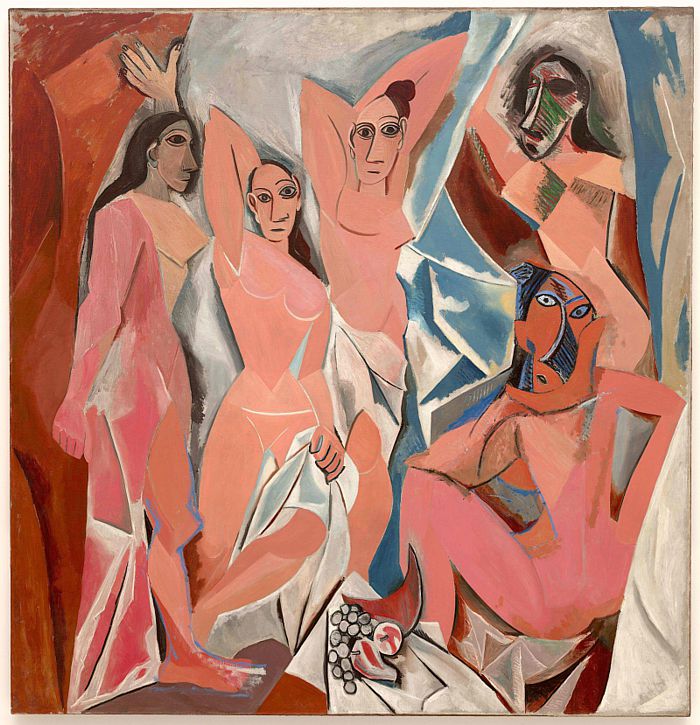
In 1907 he painted Les Demoiselles d’Avignon. Bodies stopped behaving like traditional bodies, and the faces acquired an almost sculptural harshness. The painting no longer seemed interested in reproducing reality: it wanted to construct a new reality.
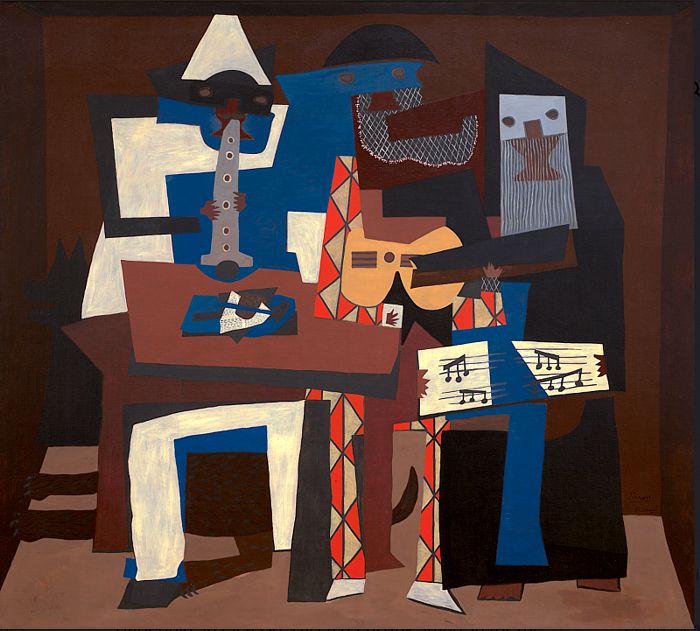
From there, together with Georges Braque, Picasso would develop Cubism. And the world began to break apart into planes. A guitar could appear fragmented. A face could show several viewpoints simultaneously. An object could stop looking like itself and yet remain recognizable.
Picasso was not simply distorting things. He was asking himself what it really means to look.
In Still Life with Chair Caning, from 1912, he took that search even further. A chair was no longer simply something that could be painted: it could physically enter the artwork through collage. The boundary between painting and reality began to disappear.
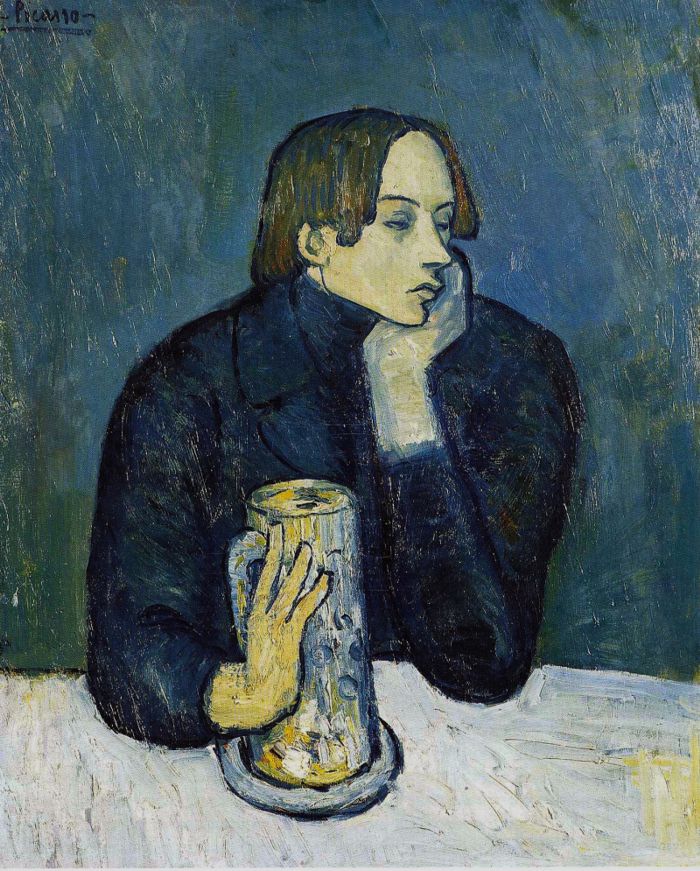
Then came Three Musicians, in 1921, with its figures transformed almost into pieces of a puzzle. Picasso could move from a deeply human painting to an almost abstract construction without feeling obliged to remain faithful to a single way of doing things. Because that seemed to be one of his constants: never standing still.
The faces changed too
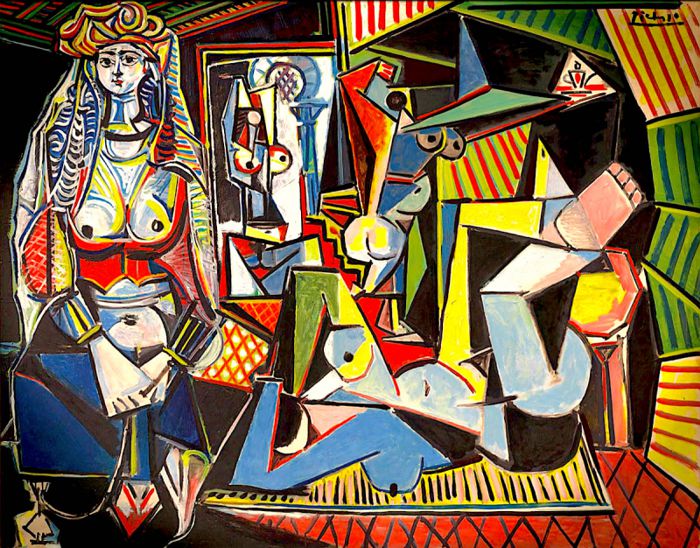
And neither did he in his personal life. Picasso had intense relationships, friendships, separations, and lovers who repeatedly found their way into his work. The people who were close to him did not remain simply in his private life: many times they became faces, bodies, colors, and symbols within his paintings.
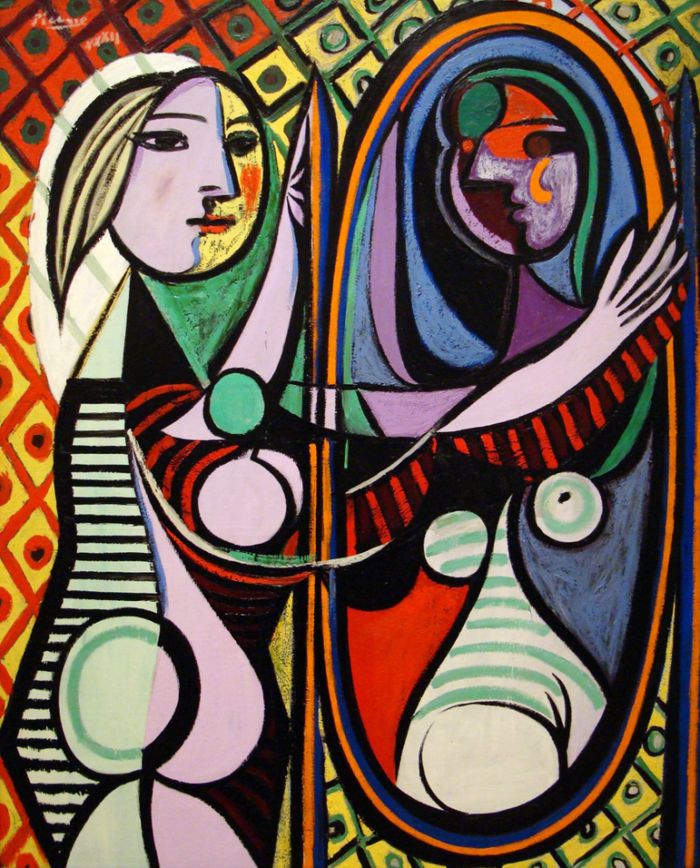
In 1932 he painted The Dream, one of his best-known portraits of Marie-Thérèse Walter. The face appears transformed, softened, and divided by forms that seem to belong more to a dream than to reality.
Picasso could look at a person and turn them into something else. Not because he wanted to hide them, but because his way of looking was no longer that of a traditional portrait painter. The person could be there and, at the same time, become memory, desire, imagination.
But the 1930s would bring something that would once again change the tone of his painting.
In 1937, Europe was being torn apart by the violence of the Spanish Civil War. And Picasso painted Guernica.
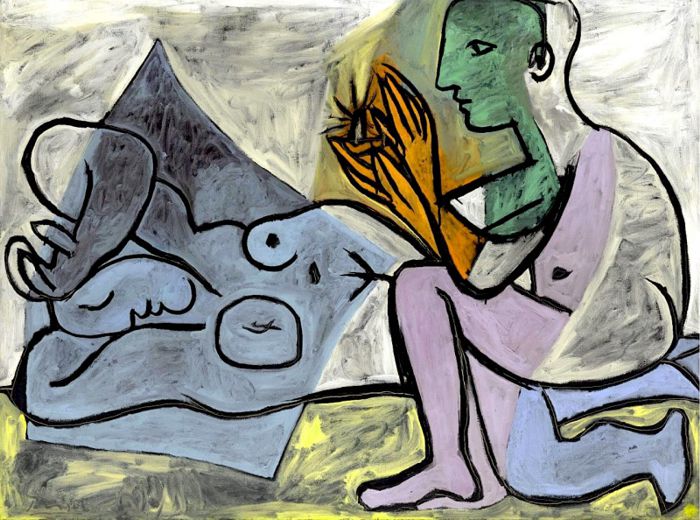
The painting was born in the midst of a specific tragedy and was created for the Spanish Pavilion at the 1937 International Exposition in Paris. Picasso began the first sketches on May 1 of that year and worked on it over the following weeks. Dora Maar photographed different stages of the process, leaving an exceptional record of how the painting changed as Picasso built it.
There are no acrobats here. No lovers. No games with form simply for the pleasure of experimentation. There are screaming bodies, animals, destruction, and pain. Color disappeared. Everything was reduced to blacks, whites, and grays.
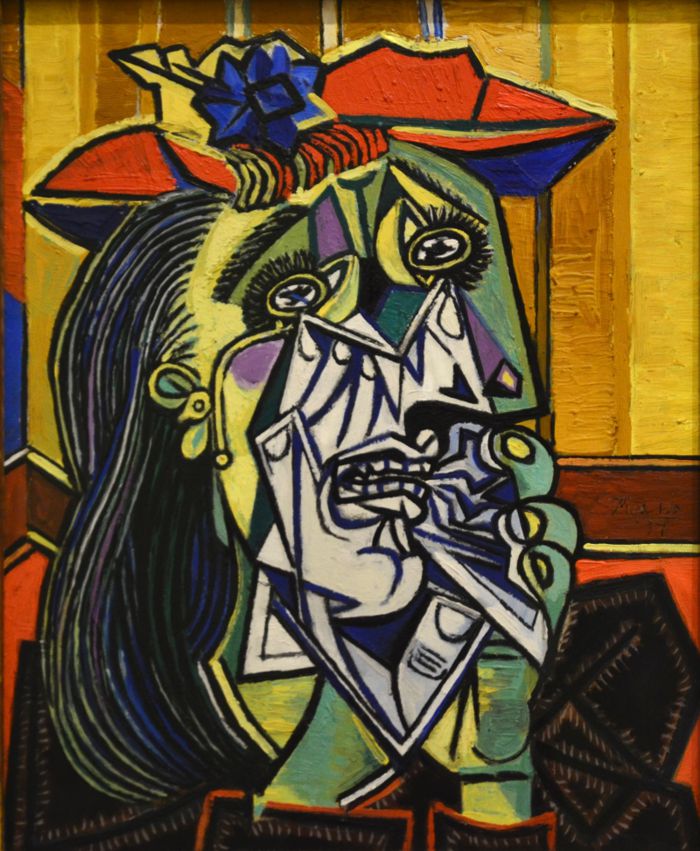
Guernica seems to be the moment when many of Picasso’s earlier explorations suddenly come together: fragmentation, distorted figures, multiple perspectives, emotion, and that permanent need to find a new way of looking.
And after Guernica, the pain continued to appear.
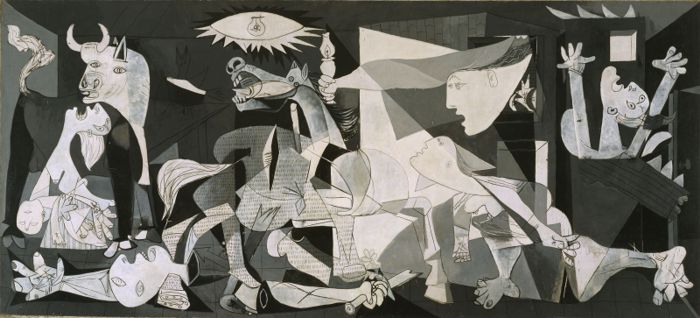
That same year Picasso painted several versions of The Weeping Woman, using Dora Maar as his model. The face is once again broken apart, but now the distortion seems to emerge directly from suffering. The eyes weep, the hands clutch the face, and the painting no longer needs to represent a tear realistically in order to convey pain.
Picasso had learned that he could break a face apart and, paradoxically, make us feel much more of what that face was experiencing.
Until the end
But Picasso still had decades ahead of him. And he changed again. And again. He changed styles, subjects, materials, and ways of working. He returned to the great masters, painted portraits, still lifes, intimate scenes, and increasingly free figures. He did not seem interested in proving that he had found a definitive formula. On the contrary: he seemed determined to escape from it.
Until the end arrived.
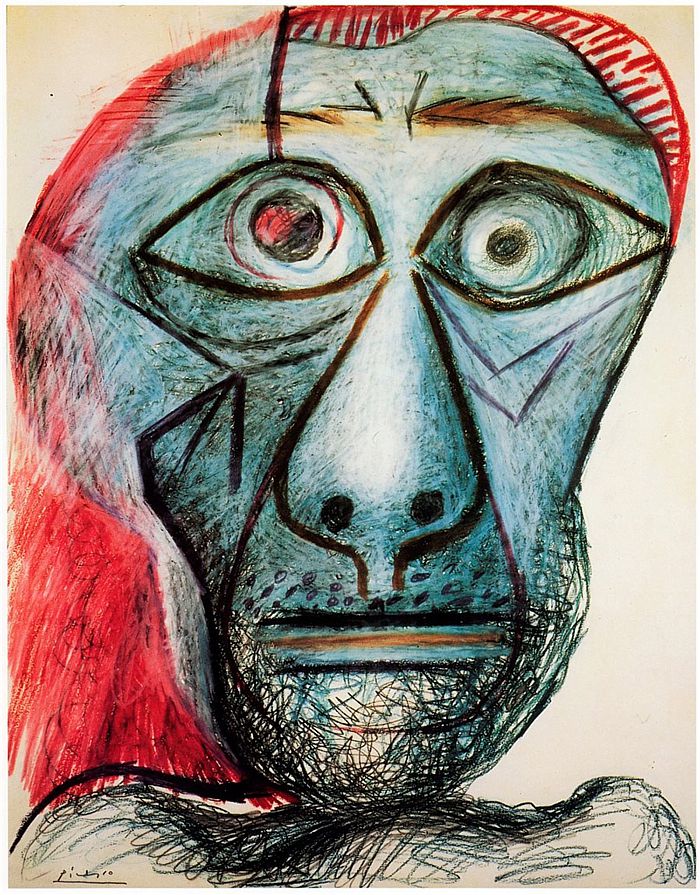
In 1972, shortly before his death, he painted one of his final self-portraits: Self-Portrait Facing Death. We no longer see the young man with dark eyes who had arrived in Paris decades earlier. The face is almost an apparition. Huge eyes stare from an exhausted face, as if Picasso himself were standing before the things he had spent his entire life trying to transform into painting: fear, the passage of time, and death.
And it is strange to think that more than seventy years passed between that young man who painted blue figures and this old man portraying himself facing death.
But one thing remained: the search.
Picasso never seemed satisfied with a single way of looking. First he painted sadness. Then he found color. Then he broke forms apart. Then he built them again. He painted desire, tenderness, violence, war, the faces of the people he loved, and the ghosts of the things he had lived through.
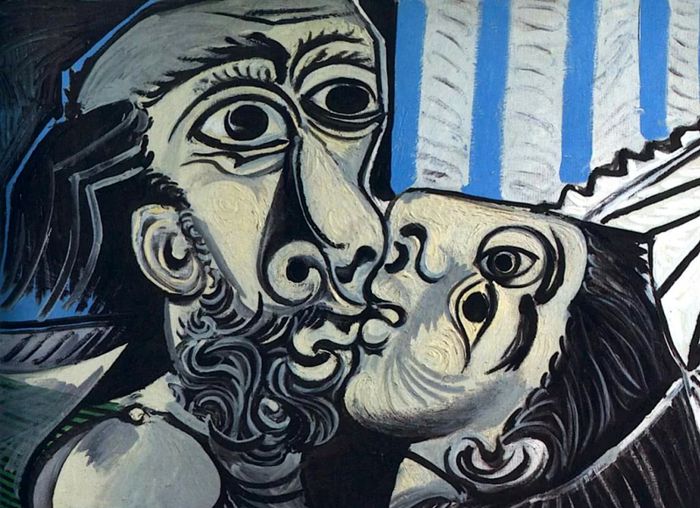
Sometimes he was delicate. Sometimes fierce. Sometimes incomprehensible. But even when he seemed to be destroying painting, he was trying to find something: another way of looking.
Perhaps that is why it is so difficult to confine Picasso to a single definition. Because Picasso was not simply a style. He was a constant transformation.
And perhaps that ultimately became his true work: never stopping his search for another way of looking.