

To look at a canvas by Rembrandt is not to contemplate the past; it is to peer into a mirror where the human condition is exposed naked, without filters or decorum. The Dutch master mastered light not to illuminate scenes, but to reveal the secrets we hide in the dark. This is the journey through his most intense pages.
In the 1630s, a young Rembrandt arrived in Amsterdam with a voracious hunger for glory. His first steps in the city were marked by sheer drama, movement, and a boundless ambition. He proved this fully when tackling the Anatomy Lesson of Dr. Nicolaes Tulp, turning a corporate commission that could have been dull into a true psychological thriller.
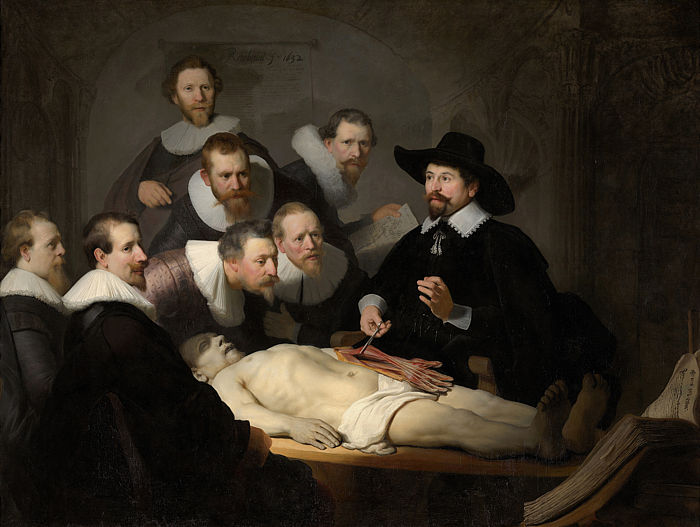
The light strikes the cold corpse directly, but the true focus lies in the gazes of the physicians, which reveal an electrifying blend of scientific curiosity, fascination, and awe before the mystery of death. It is the very same light that, that same year, turns introspective in the Philosopher in Meditation.
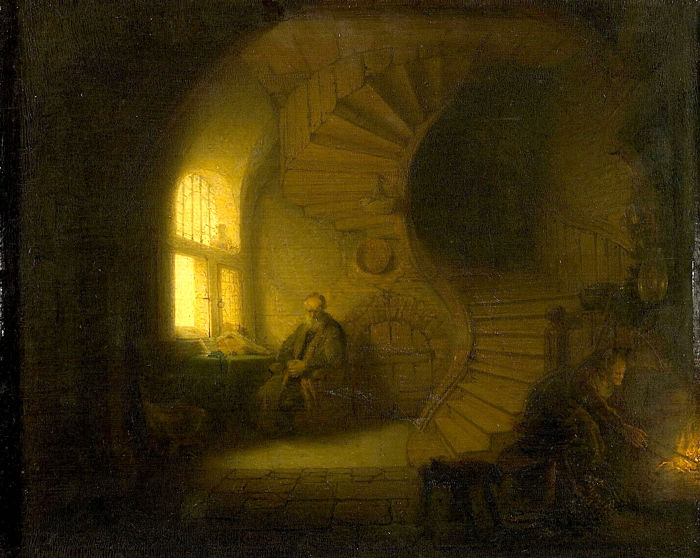
This work is pure visual silence; in that dimly lit corner, the monumental spiral staircase seems to descend into the depths of the human mind, while the spark of light entering through the window represents the flash of thought and mysticism amidst the world's chaos. Soon, that contained genius erupted into dynamic and theatrical landscapes.
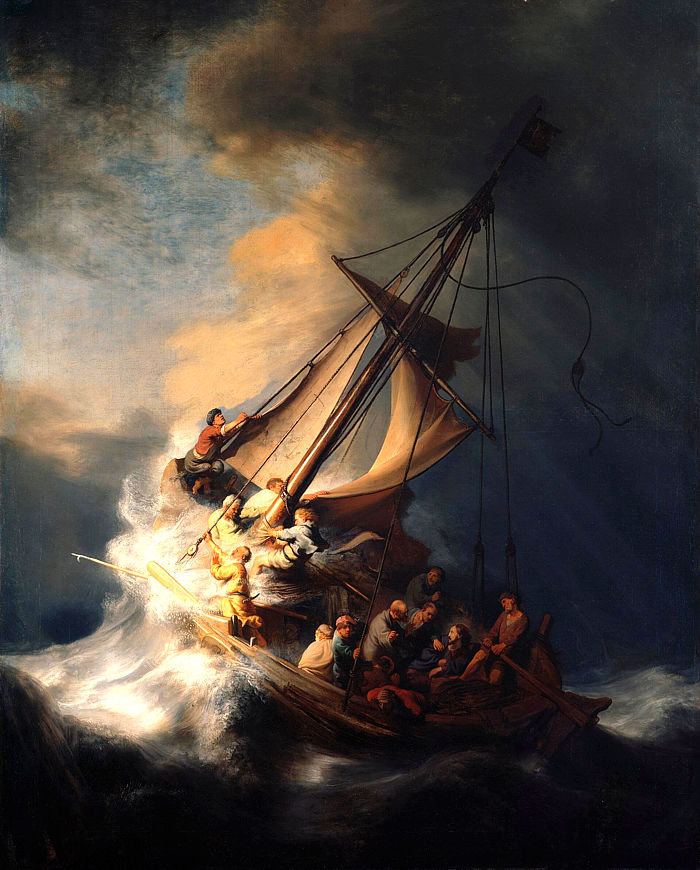
In painting The Storm on the Sea of Galilee, Rembrandt brought to life one of the greatest expressions of terror and faith ever conceived, where one can feel the creaking of the wood, the violence of the choppy waves, and the panic on the faces of the disciples, just as the light tears through the clouds like a divine promise of salvation.
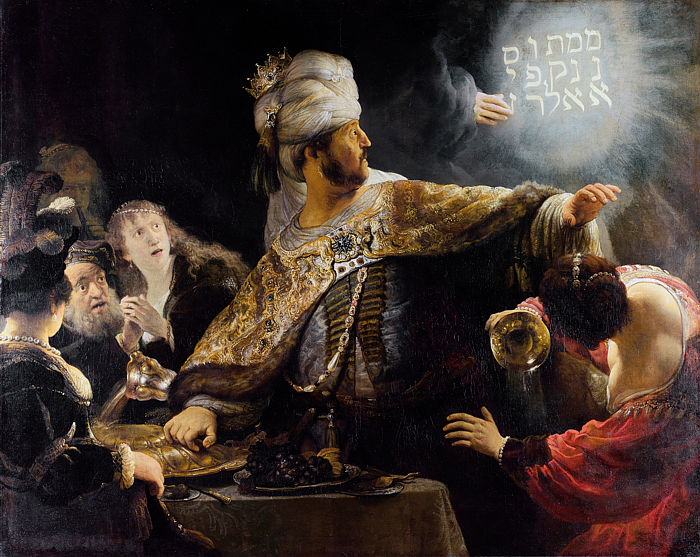
That same scenographic and Baroque power defines Belshazzar's Feast, where he captured the exact moment of an empire's collapse. The king's bulging eyes, the spilling wine, and the almost tactile texture of his golden garments scream despair before the divine hand writing his tragic destiny on the wall.
With the years, however, the fireworks of youth gave way to a much deeper introspection. The technique became thicker, freer, and more visceral.
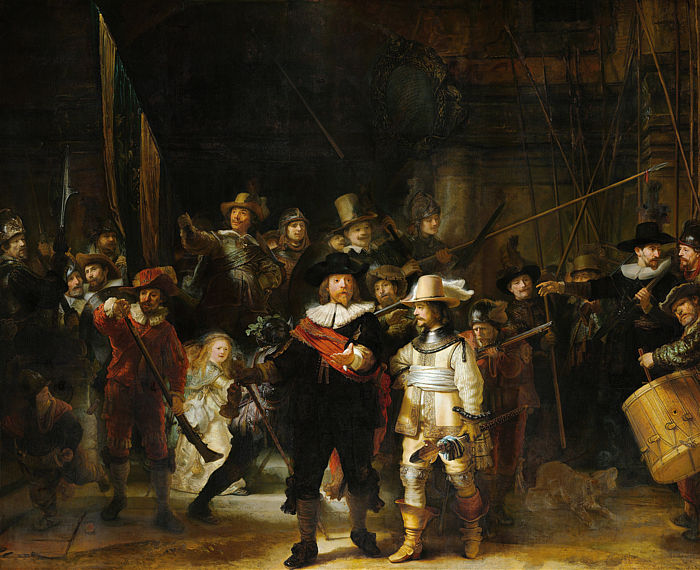
His definitive consecration arrived with The Night Watch, a masterpiece that completely revolutionized the rules of static military portraiture to create a chaotic, noisy parade pulsing with life. The militia does not pose; instead, it deploys before the viewer while the light plays capriciously, blessing a mysterious young girl in gold who shines like a talisman amidst the gloom of the street. It is the absolute triumph of action, but also the beginning of a turning point toward maturity.
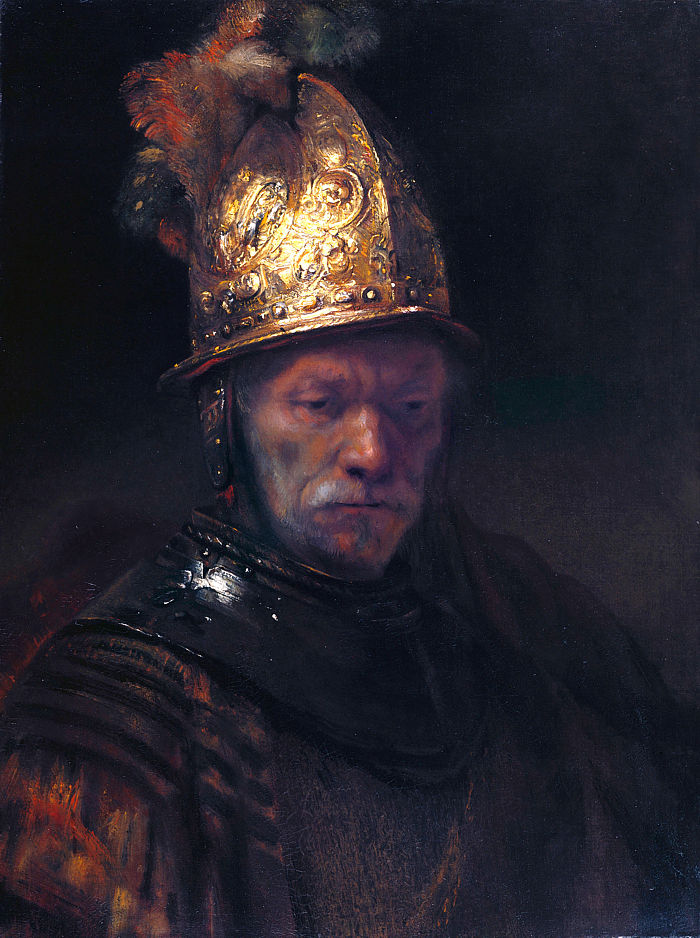
Sometime later, in The Man with the Golden Helmet, that epic tone is transformed into a monument to fatigue and dignity. The genius no longer resides in movement, but in the weary face of an old man and the brutal relief of a metal that gleams with an almost suffocating weight, carrying the traumas of a lifetime of battles.
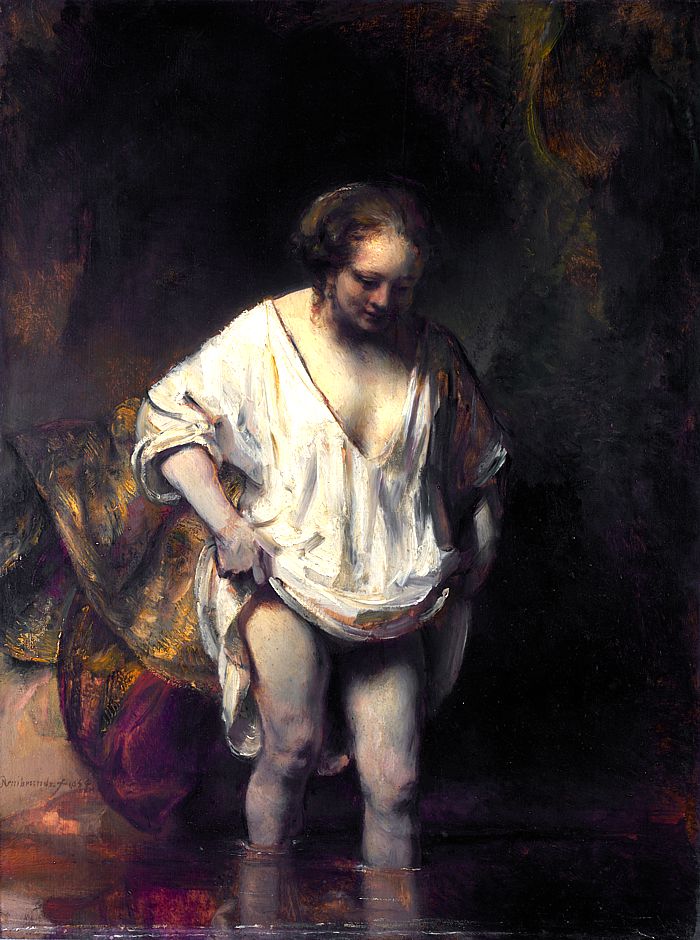
Maturity also brought him a renewed sensitivity toward the everyday, reflected in A Woman Bathing, a haven of tenderness and vulnerable eroticism inspired by Hendrickje Stoffels, his great love during the difficult years. By portraying her lifting her smock to step into the water, with a thick and passionate brushstroke, he broke away from all mythological idealization to offer us a real, human, direct, and deeply intimate love.
In his final years, stricken by bankruptcy and the tragic loss of his loved ones, Rembrandt stripped himself of all vanity.
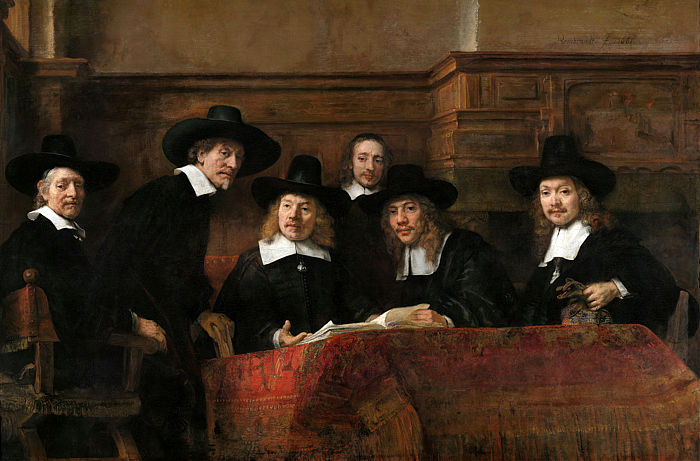
His painting became spiritual and mystical. Even when fulfilling professional commitments, as in The Syndics of the Drapers' Guild, he proved he was still the king of portraiture. The businessmen look straight at us, as if we had just interrupted their meeting, in a masterclass of psychology where honesty, complicity, and the weight of commercial responsibility are felt in every gaze.
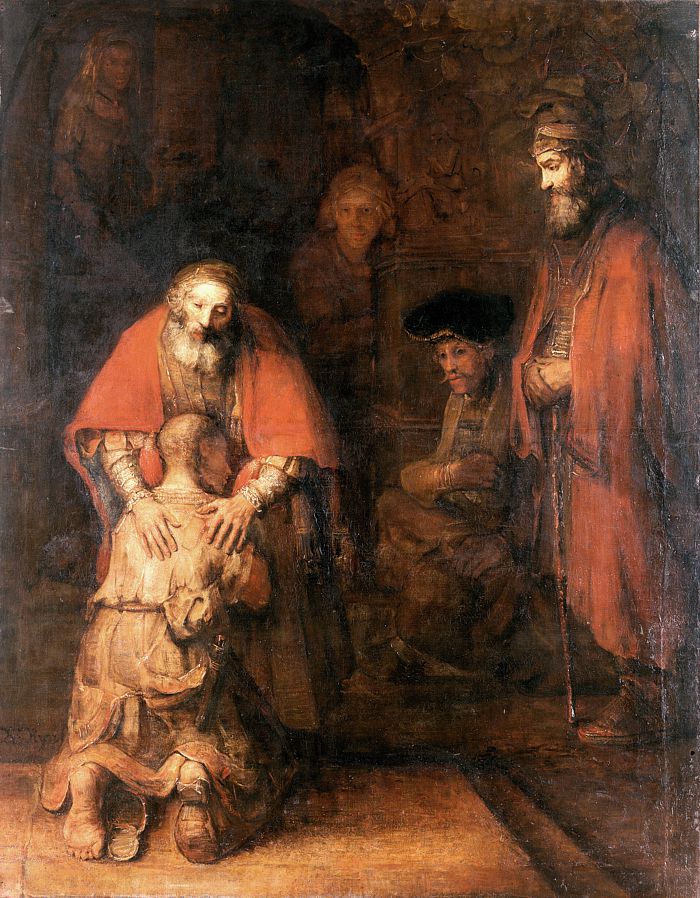
But the true testament of his existence arrived in the year of his death with The Return of the Prodigal Son, perhaps the most moving painting in art history. A broken and elderly Rembrandt captured absolute forgiveness here through the hands of a father—one robust and paternal, the other delicate and maternal—holding the back of a wounded, ragged son. There is no longer drama or theatrical lighting, but an eternal embrace that transcends the canvas and reconciles the human being with their own fragility.
Rembrandt did not seek perfect beauty, but the truth hidden behind the cracks of existence. Every wrinkle, every weary gaze, and every corner of shadow on his canvases stands as the testimony of a man who dared to paint the weight of living, loving, and losing. At the end of his path, stripped of wealth and struck by tragedy, he discovered art's greatest secret: that it is precisely within our greatest vulnerability where the purest light shines. His works are not static relics on museum walls; they are altars to human resilience.
When we stand before them, we are not mere spectators of 17th-century Holland. We become the orphan seeking forgiveness, the sailor defying the storm, and the old man reflecting in the silence of the night. Rembrandt gifts us an eternal refuge where darkness never has the final word. Centuries later, his brush reminds us that our own shadows are not the end of the road, but the essential stage for our inner light to learn how to shine.
THE WORKS
Anatomy Lesson of Dr. Nicolaes Tulp (1632)
Philosopher in Meditation (1632)
The Storm on the Sea of Galilee (1633)
Belshazzar's Feast (1635)
The Night Watch (1642)
The Man with the Golden Helmet (1650)
A Woman Bathing (1654)
The Syndics of the Drapers' Guild (1662)
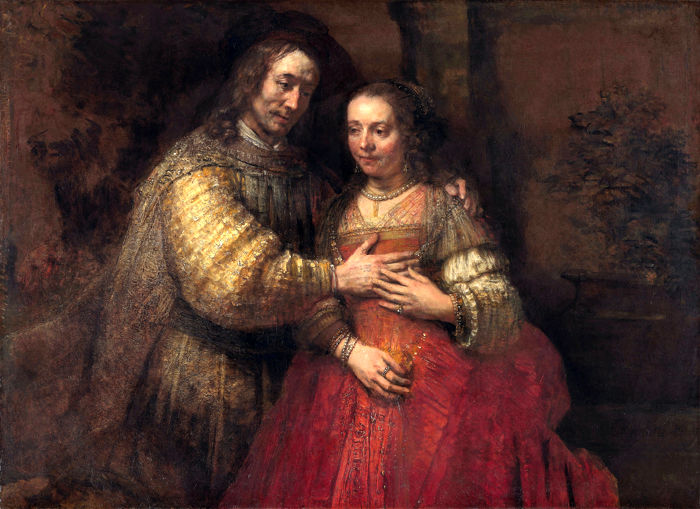
The Jewish Bride (1666)
The Return of the Prodigal Son (1669)
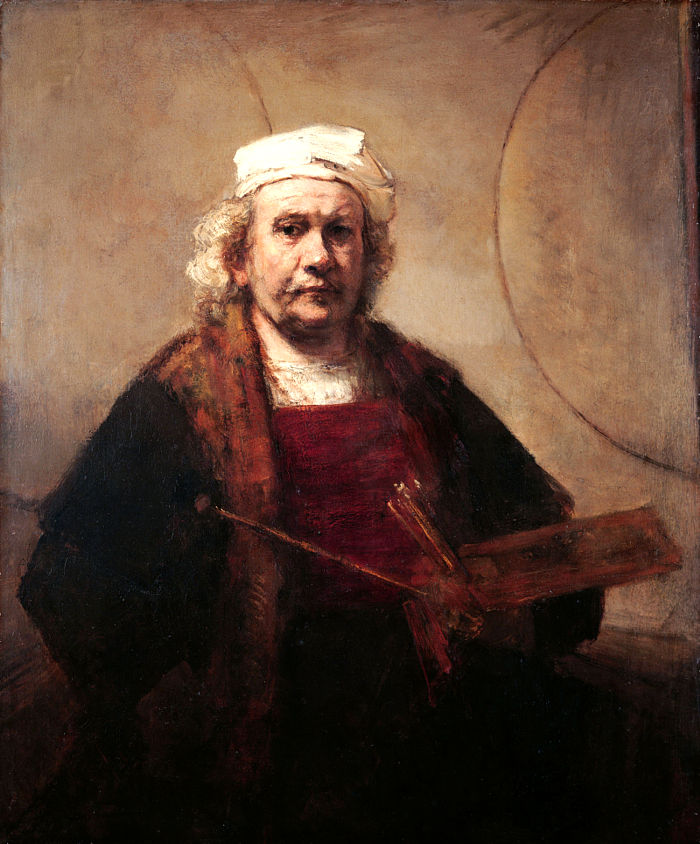
Self-Portrait with Two Circles (1669)