

Do you really think social media invented scandals and gossip? Of course not! In the 18th century, they were everywhere, and this masterpiece by Jean-Honoré Fragonard is the perfect example that the French aristocracy knew exactly how to have fun (and how to hide it). Life is Art, but sometimes, art is the evidence of the crime.
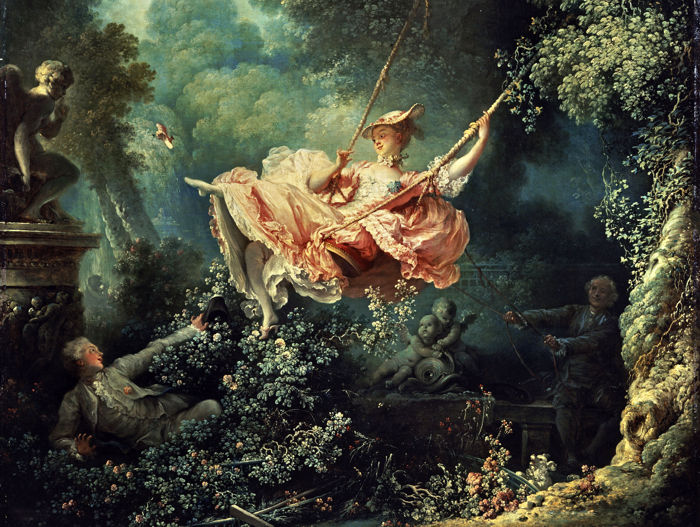
At first glance, The Swing looks like a romantic, almost innocent scene, surrounded by overflowing and ethereal nature. But don't be fooled by the pastel colors and the softness of the clouds. Behind all that perfect garden and silk dresses, there’s a very daring secret that made more than one conservative of the time break a sweat.
A commission no one wanted to accept
The story goes more or less like this: a baron of the French nobility, whose name has been forever linked to this scandal, first approached another painter named Gabriel-François Doyen with a very specific, but so "indecent" request that poor Doyen got scared and rejected the job. It was then that Fragonard, a much more liberal guy eager to experiment, accepted the challenge.
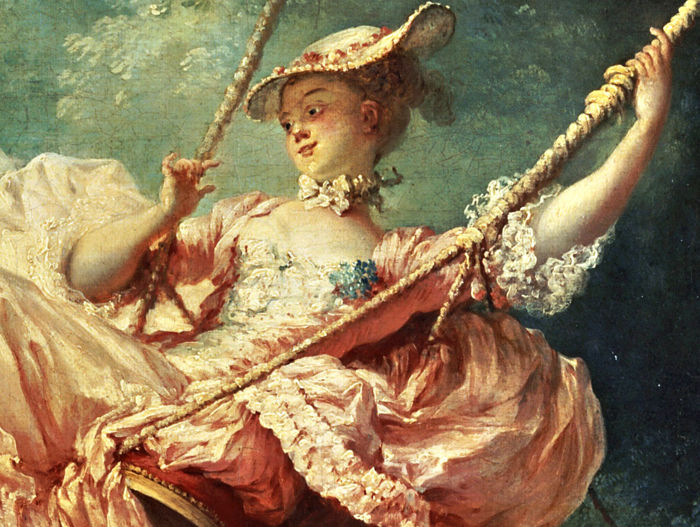
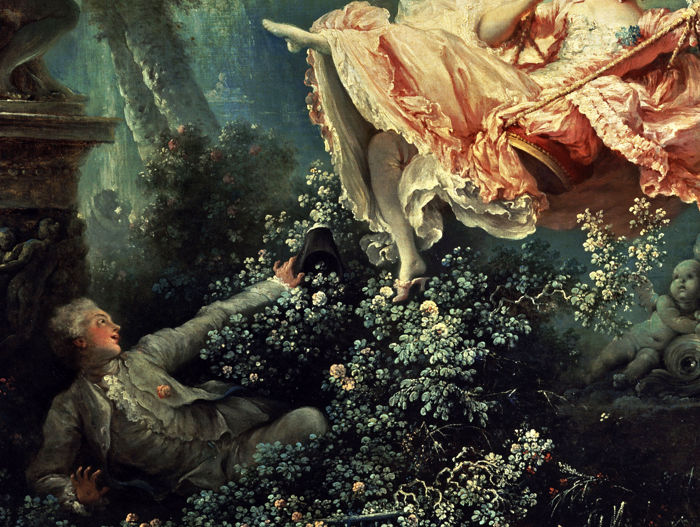
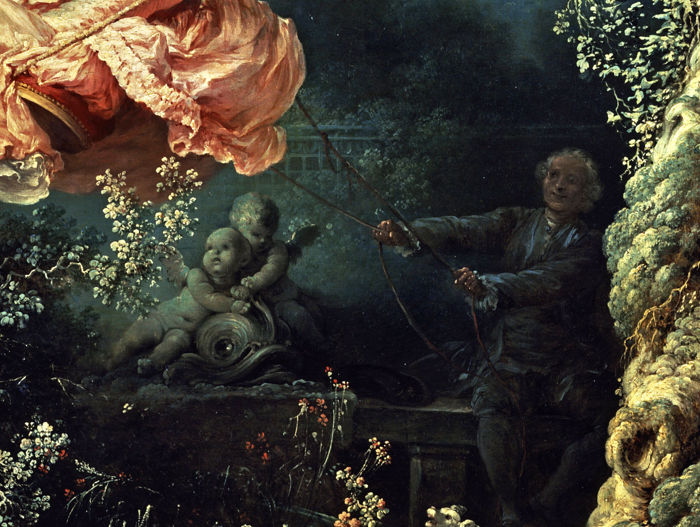
The baron wanted a painting of his mistress on a swing and, to spice things up, he asked for her to be pushed by a bishop. Yes, you read that right: a member of the Church. In Fragonard's final version, the man pushing seems more like a clueless husband (or a clergyman acting as a spouse), which adds a layer of brutal irony. But here’s the best part: the baron demanded to be painted strategically hidden among the bushes. His goal? To have the perfect angle to see... absolutely everything under the girl's skirts as she flew through the air. Just look at the man's face of pure satisfaction!
Rococo: The style of seduction and pleasure
To understand this painting, you have to understand Rococo. Fragonard was the absolute master of this movement, a style that decided Baroque was too serious, dark, and heavy. Rococo wanted light, it wanted a party, it wanted love affairs, and, let’s be honest, it wanted frivolity.
In The Swing, the style is evident in every brushstroke. The pastel colors (pinks, mint greens, sky blues) create a dreamlike atmosphere where it seems nothing bad could happen. The shapes are curved, organic; nature is not a real forest, it is a domesticated and sensual jungle that seems to embrace the lovers. This "sfumato" technique and diffused light are what make the scene look like a fantasy, moving it away from the harsh reality of Paris at the time.
Symbols that tell the truth
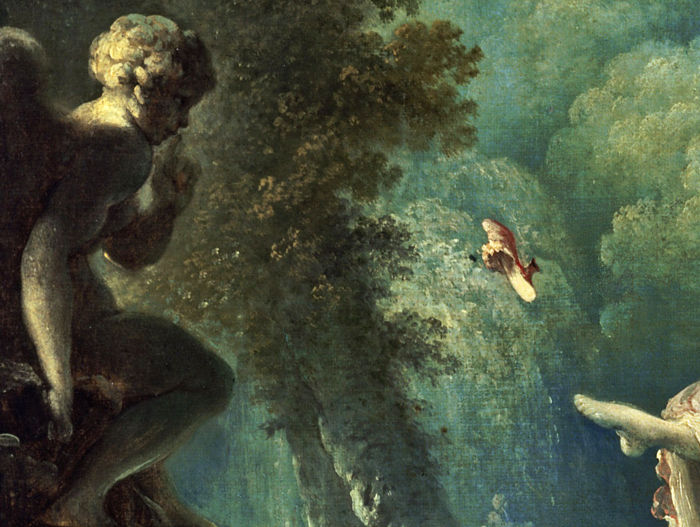
However, the artist didn’t just paint a daring scene; he filled the canvas with symbols that only those "initiated" in the art of seduction could understand. See that slipper flying through the air? It’s no clothing accident. In the 18th century, losing a shoe was a direct metaphor for the loss of innocence or the start of an intimate encounter. The girl throws her shoe toward a statue of Cupid (the god of love), who has a finger on his lips asking for silence. Shhh! It's a secret.
On the right, below the man pushing, there is a small lapdog. In traditional art, the dog symbolizes fidelity. But look closely: the dog is barking desperately. It’s trying to warn the "poor" husband or clergyman who continues to push the swing without suspecting he is the victim of an infidelity right under his nose. Fidelity is alarmed, but no one is listening.
The psychology of the characters
Let's analyze the glances. The young woman on the swing doesn't look at her husband; she looks directly at the hidden baron. There is an electric complicity in that visual exchange. She knows exactly what he is looking at and, far from being ashamed, she swings harder. She is a woman in control of her own sexuality in a world dominated by men, even if under the pretext of an aristocratic game.
The baron, for his part, represents the male desire of the time: passive but intense observation. His left hand rests on the ground while his right is raised, almost as if he wanted to touch what he is seeing. It is voyeurism elevated to the category of fine art.
A legacy of mischief and technique
Fragonard didn’t just leave us historical gossip; he left us a lesson in technique. The way the light hits the pink silk dress is masterful. You can almost feel the texture of the fabric and the movement of the air. Despite being a small work compared to the great murals of the time, its impact was massive.
Art is not only beautiful or spiritual; sometimes it is proof of the scandals that have moved the world throughout history. Fragonard managed to make a moment of infidelity look so aesthetic and delicate that it ended up becoming one of the most beloved works in the Wallace Collection in London. It reminds us that, beneath the powdered wigs and refined manners, human beings in the 1700s were just as passionate, complex, and "gossipy" as we are today.
There are things a short doesn't have time to explain. Find the full work in the link in the description. And if you liked it, see you at the next masterpiece!
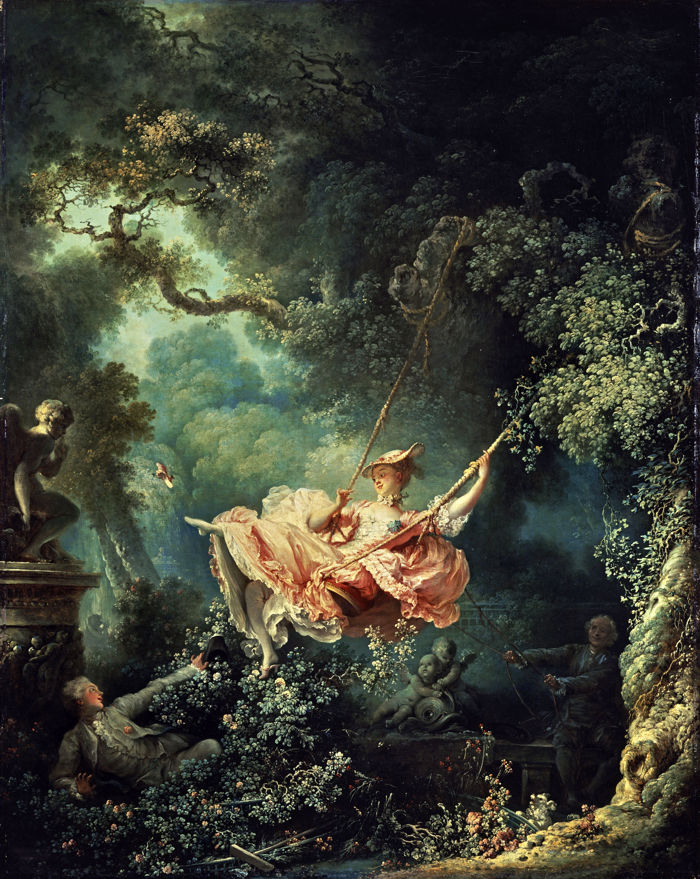
THE WORK
The Swing (The Happy Accidents of the Swing)
Year: 1767
Artist: Jean-Honoré Fragonard
Technique: Oil on canvas
Style: Rococo
Size: 81 cm × 64 cm
Location: Wallace Collection, London