

In the wetlands of Denmark, where willows lean over the whispering waters of the river, the tragedy of a young woman named Ophelia unfolds. Her story begins in Elsinore Castle, where her father, the king's counselor, Polonius, instructs her in virtue and obedience. Ophelia, a young woman of serene beauty and sensitive soul, is in love with Hamlet, the tormented prince of Denmark.
But the kingdom is shrouded in a mist of intrigue and betrayal. King Claudius, Hamlet's stepfather, usurped the throne following the death of King Hamlet, the prince's father. Consumed by grief and suspicion, Hamlet feigns madness in an attempt to uncover the truth.
Concerned by Hamlet's transformation, Ophelia tries to understand him. Meanwhile, her brother, Laertes, warns her of the dangers of loving Hamlet, fearing that he might use her and then abandon her. Nevertheless, Ophelia is determined to remain faithful, believing in the goodness of the man she loves.
The ghost of King Hamlet appears, revealing the true cause of his death: he was poisoned by Claudius. Hamlet vows revenge and plunges even deeper into his frenzy. Ophelia, witnessing her lover's torment, struggles to remain strong.
Hamlet's madness becomes increasingly apparent when he confronts Ophelia, rejecting her with cruel words. Wounded and confused, Ophelia sinks into sorrow. Laertes, furious over his sister's humiliation, swears revenge against Hamlet.
Meanwhile, King Claudius and his counselor, Polonius, conspire to get rid of Hamlet. They decide to use Ophelia as bait, sending her to speak with him while they secretly listen from behind a curtain. The encounter ends in a tumultuous confrontation, during which Hamlet accuses Ophelia of betrayal and rejects her once again.
Abandoned and heartbroken, Ophelia descends into madness. Her thoughts become fragmented, and she finds comfort only in the songs of birds and the company of the river. She wanders through the fields, weaving flower garlands and whispering to the spirits of nature.
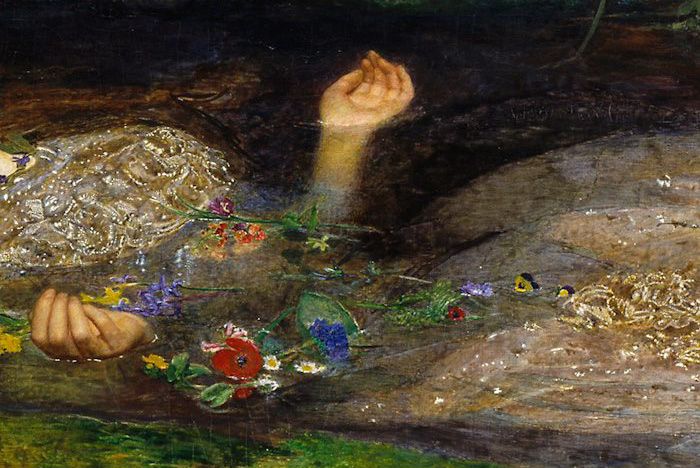
The news of her father Polonius's death comes as a devastating blow. Her fragile mind breaks even further, and she retreats completely into a world of fantasy. The people of the kingdom watch her with a mixture of pity and fear, unable to comprehend the depth of her suffering.
Returning from France, Laertes finds his sister utterly devastated. Consumed by anger and grief, he joins King Claudius's conspiracy to take revenge on Hamlet. Together, they plot a deadly duel in which Laertes will face Hamlet with a poisoned sword.
The day of the duel arrives, and the tension in the air is palpable. Unaware of the danger awaiting her, Ophelia drifts along the river, lost in the ecstasy of her madness. The battle erupts, and Laertes wounds Hamlet with the poisoned sword. Amid the ensuing confusion, Ophelia emerges from the water like an ethereal vision, witnessing the tragedy unfolding before her eyes.
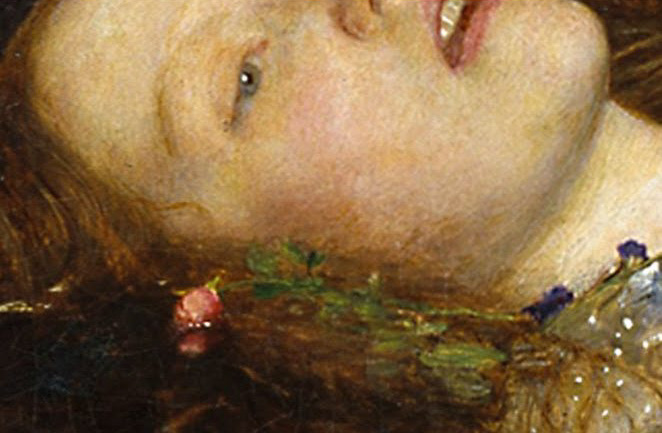
Mortally wounded, Hamlet confronts King Claudius, exposing his treachery before succumbing to his fate. Laertes, remorseful for his actions, confesses the conspiracy and dies alongside Hamlet.
Abandoned and alone, Ophelia sinks once more into the icy waters of the river. Her body, surrounded by the whispering currents, drifts gently into the darkness. With her final breath, she finds peace in the certainty that her love for Hamlet will transcend even death.
The kingdom of Denmark, shrouded in mourning and remorse, bids farewell to the young lovers with tears and whispers of regret. Along the riverbanks, white flowers float upon the surface, silent witnesses to a tragedy that will endure in the memory of generations to come.
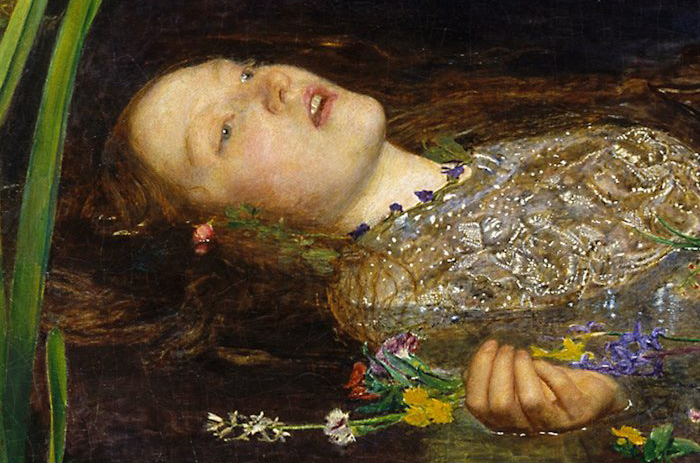
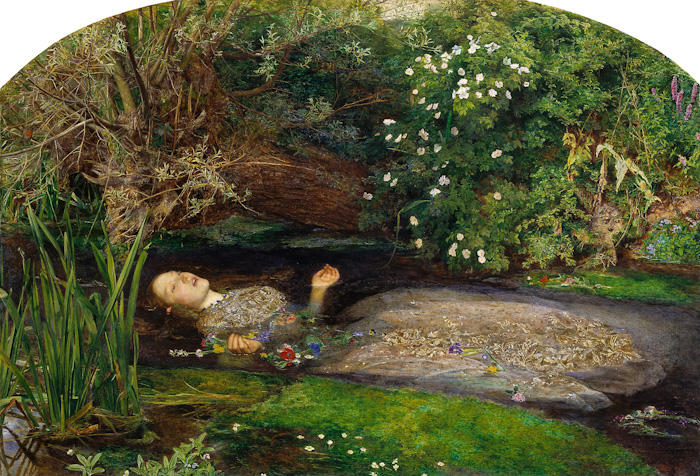
Ophelia by John Everett Millais is an iconic painting of the Pre-Raphaelite movement, created between 1851 and 1852. It depicts Ophelia, a character from Shakespeare's Hamlet, floating in the water shortly before her death. The painting is rich in symbolism: the flowers represent her madness and tragic fate, while the water foreshadows her impending drowning. Millais spent months painting outdoors to capture nature with extraordinary precision. The meticulous attention to detail and emotional intensity make Ophelia a masterpiece that has stood the test of time, captivating generations with its melancholic beauty.
THE ARTWORK
Ophelia
John Everett Millais
1851–1852
Pre-Raphaelite Brotherhood
Oil on canvas