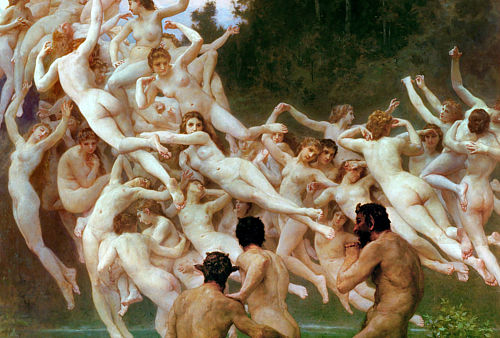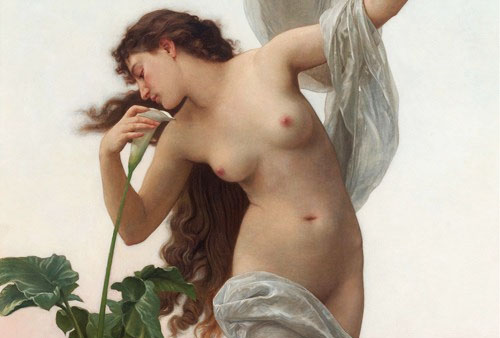


Romanticism, which flourished approximately between the late 18th century and the mid-19th century, was not just an artistic fashion; it was a cultural revolution that encompassed literature, music, and, of course, painting. It was born as a passionate reaction against the cold logic, strict order, and rationality imposed by Neoclassicism. If the Neoclassicists sought perfection in symmetry and the rules of Greco-Roman antiquity, the Romantics sought truth in a much deeper and more turbulent place: sentiment, imagination, and uncontrollable emotion.
This movement placed the individual, with their passions, fears, and dreams, at the center of the creative universe. The Romantic artist was no longer a mere imitator of nature or a moralist serving the State; they were a tormented genius, a visionary who sought the Sublime—that overwhelming sensation that blends terror and beauty in the face of the immensity of nature or destiny.
The New Protagonist: The Untamable Force of Nature
In Romantic painting, nature ceases to be a pretty backdrop or an ordered stage (as it was in Neoclassicism) to become the absolute protagonist, a reflection of the human being's emotional state. Landscapes are often stormy, dark, or enveloped in fog, symbolizing the uncertainty and brute force of a world that reason cannot dominate.
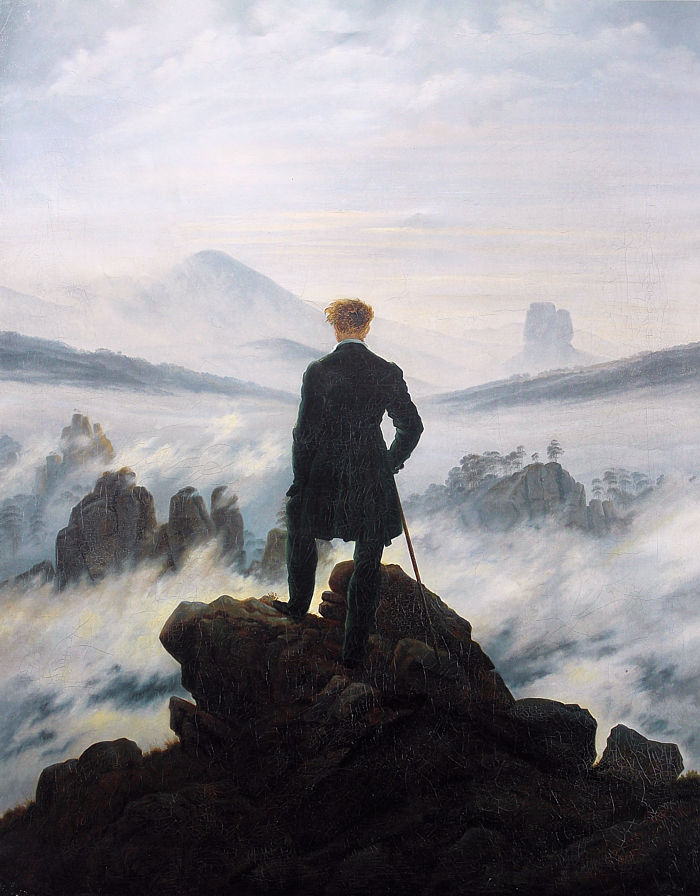
Caspar David Friedrich (1774-1840) is the undisputed master of this mystical landscape. His works often show figures with their backs turned, contemplating an infinite horizon. By not being able to see their faces, the viewer is invited to project their own feelings onto the landscape, experiencing solitude, transcendence, and immensity. The external world becomes a window to the soul.
One of his most iconic works is The Wanderer Above the Sea of Fog (1818). Here, a man stands on a rocky peak, his back to us, while a sea of clouds engulfs the known world. The scene is the visual definition of the Sublime: a sense of wonder and terror in the face of unlimited freedom.
The Testimony of History and Horror
Another major axis of Romanticism is historical drama and the denunciation of political injustices, painted with a visceral intensity that previous art had never allowed. Artists sought contemporary themes or moments from the past that would awaken passion and anguish.
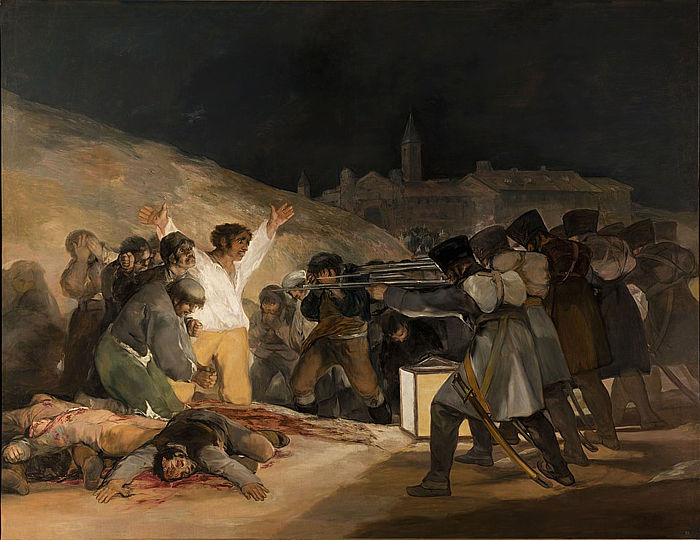
Francisco de Goya y Lucientes (1746-1828) is a transitional figure, but his later works define the essence of Romantic drama. In The Third of May 1808 in Madrid (1814), Goya abandons Neoclassical nobility and serenity to show the raw horror of war. Light falls dramatically on the man about to be executed, his arms raised in a gesture reminiscent of Christ. This approach humanizes the anonymous victim and turns the scene into an eternal cry against tyranny and fate.
Romantic painting also addressed madness and the dark side of the mind, as seen in Goya's Black Paintings, works that reflect the anguish, fear, and pessimistic vision the artist held of the human condition. Saturn Devouring His Son is a terrifying example of this exploration of the irrational.
Social Impact and the Epic of Misfortune
Théodore Géricault (1791-1824) and Eugène Delacroix (1798-1863) were the great standard-bearers of French Romanticism, and they used art to make bold political statements.
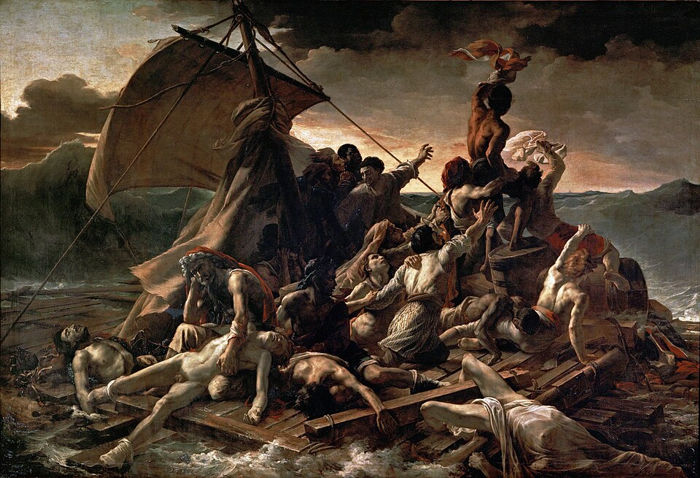
Géricault's masterpiece, The Raft of the Medusa (1819), is an epic of human despair. Based on a real and politically scandalous shipwreck, Géricault immersed himself in horror, visiting morgues and hospitals, to achieve a shocking representation of suffering. The composition is dynamic, with dying bodies and a pyramid of figures struggling for life, all under a dark sky that reflects the indifference of nature and the moral failure of leaders. This painting marked art history for its brutal realism and socially critical content.
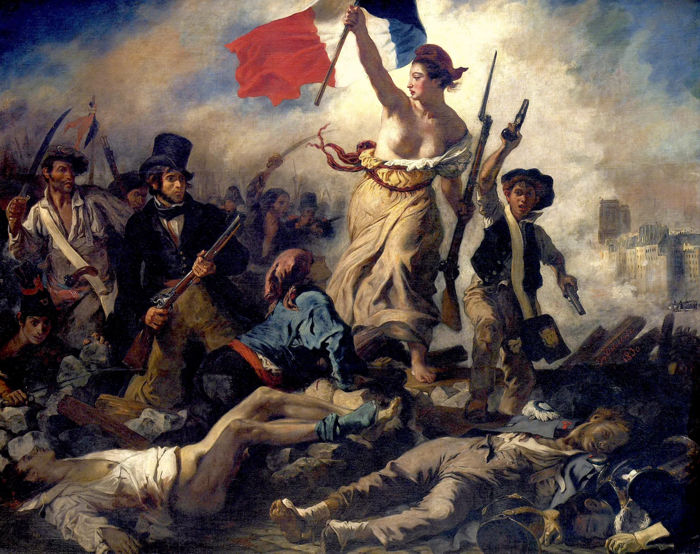
For his part, Delacroix took color and movement to a new level. His brushwork is loose and vibrant, conveying a palpable energy. Delacroix's most famous work, and perhaps of the entire movement, is Liberty Leading the People (1830). In it, a female figure (Marianne, symbol of the French Republic) guides the masses over barricades and corpses. Although it celebrates a contemporary political event (the July Revolution of 1830), the work is profoundly Romantic due to the passion with which it is executed, the dramatic allegory of Liberty, and the epic chaos of the battle.
Technical and Stylistic Characteristics
The style of Romantic painting deliberately moves away from the clean lines and static composition of Neoclassicism:
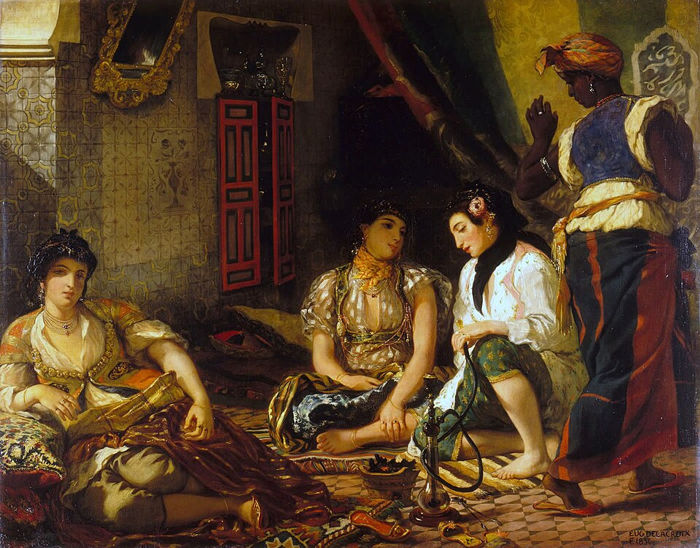
- Color over Line: Color becomes the main vehicle for emotion. Romantics, especially Delacroix, valued contrasts of color, using warm and vibrant tones, to create an immediate sensory impact.
- Free and Dynamic Brushwork: The brushstroke is visible, energetic, and less polished than that of their predecessors. This adds a sense of urgency, movement, and emotion, as if the work had been created in a burst of passion.
- Dramatic Composition: Diagonals, pyramidal forms, and light contrasts (Chiaroscuro is used to intensify the drama) predominate, creating visual tension and guiding the viewer's eye through the narrative chaos.
- Exoticism and the Irrational: There was a fascination with the oriental, the exotic, the mysterious, and the supernatural. Themes from Gothic literature, medieval legends, and distant cultures became sources of inspiration, offering an escape from bourgeois and rational reality.
The Legacy of Emotion
Romanticism was a movement of great force that taught us to value not only beauty, but also terror, melancholy, and pain as legitimate sources of artistic inspiration. By freeing art from the yoke of reason and rule, it paved the way for future avant-garde movements.
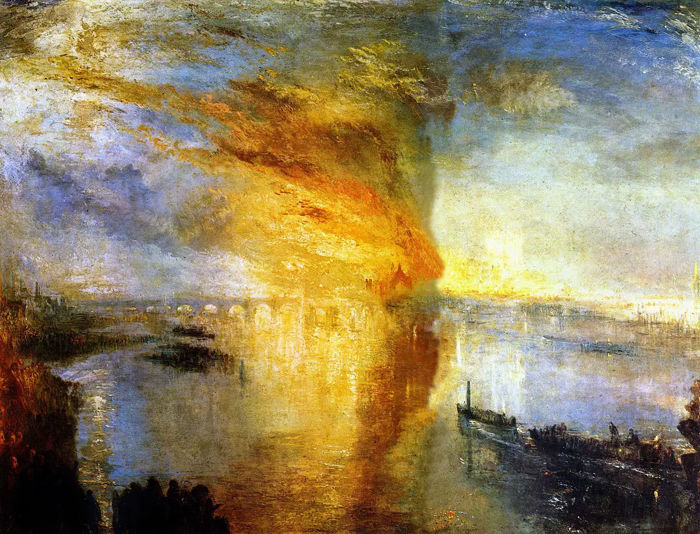
The exploration of individual subjectivity, the fascination with the unconscious, and the valuation of color and expressive brushwork laid the groundwork for subsequent movements. Artists like William Turner (1775-1851), with his landscapes that dissolve form into light and color, prefigured Impressionism.
The legacy of Romanticism endures as a reminder that the human experience is vast and deep, a torrent of feelings that is more powerful than any imposed rule. It is the movement that, in essence, celebrates the untamable heart and the epic spirit of the human being in the face of the immensity of the cosmos. It invites us to feel deeply and to find beauty, not only in the calm, but also in the storm.