

Imagine spending years of your life painting the most important work in Christendom, only to have a Vatican bureaucrat enter your sanctuary and claim your art is more worthy of a cheap tavern than a chapel. This is the story of how Michelangelo Buonarroti, the Renaissance's most temperamental genius, decided he didn't need words to defend himself: his brushes were enough to condemn his enemy to eternal torment before the eyes of the entire world.
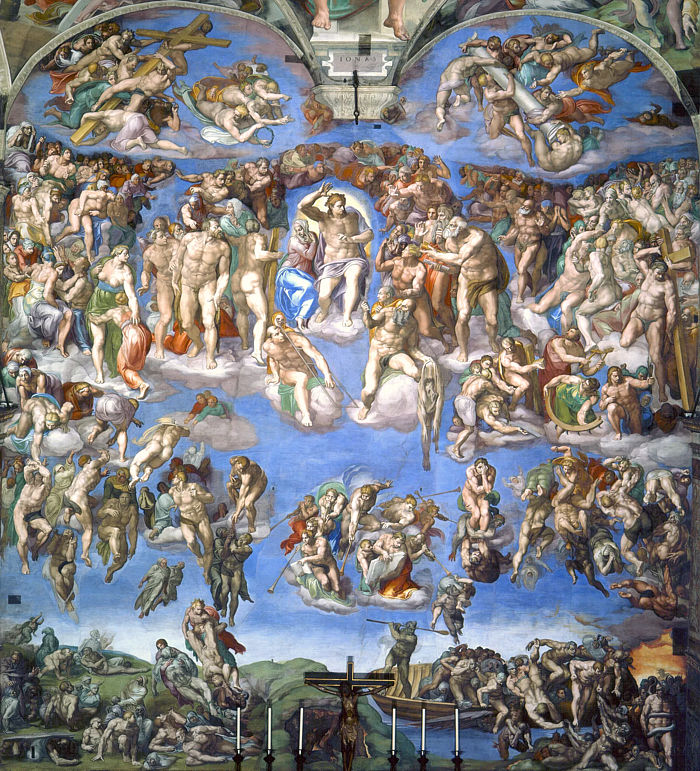
The Last Judgment, covering the altar wall of the Sistine Chapel, is one of humanity's most imposing creations. But behind its technical majesty lies a web of insults, coded messages, and a revenge so brutal that the Pope himself was forced to wash his hands of it. If you ever thought religious art was boring, it’s because you don’t know the level of contempt Michelangelo poured onto the threshold of hell.
The Master of Ceremonies and the Insult That Sparked Chaos
It all began when Michelangelo had already spent years high up on scaffolds, inhaling lime dust and sacrificing his health for the frescoes. Biagio da Cesena, the Pope’s Master of Ceremonies, had the audacity to enter and supervise the progress. Cesena was a man of strict rules and a closed mind, and what he saw horrified him: hundreds of naked, muscular bodies in contorted poses.
Cesena did not hold back his opinion. Out loud and with disdain, he described the work as "dishonest" and "obscene." He claimed it was a disgrace for so many undressed figures to be shown in such a sacred place. For Michelangelo, who viewed human anatomy as the ultimate expression of the divine, this was a personal attack on his faith and his genius. But the artist did not shout, nor did he climb down from the scaffold to fight. He simply memorized every feature of Cesena’s face and waited for the perfect moment to execute his revenge.
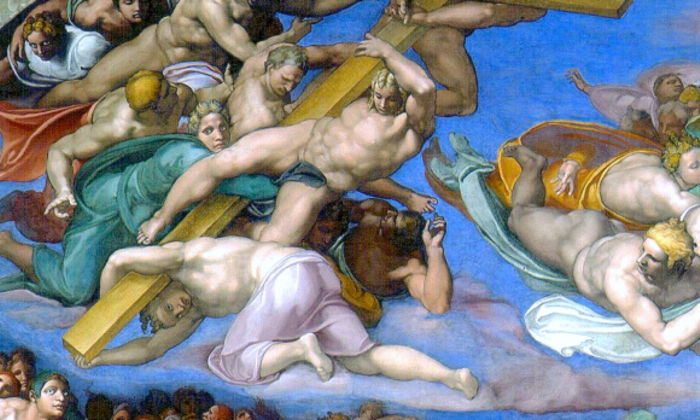
Minos: The Judge of Hell with Donkey Ears
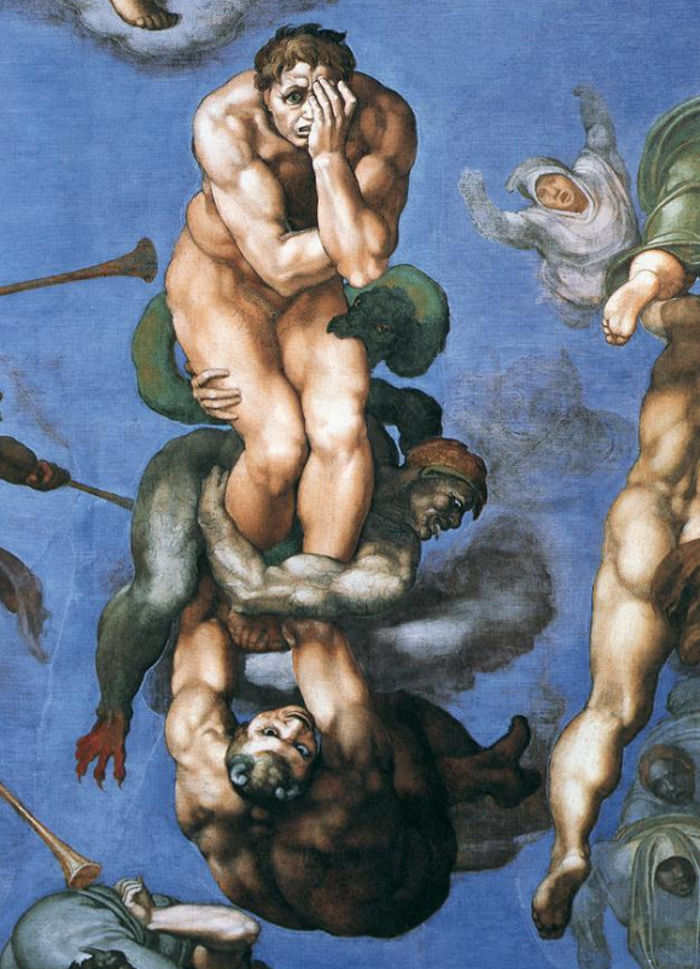
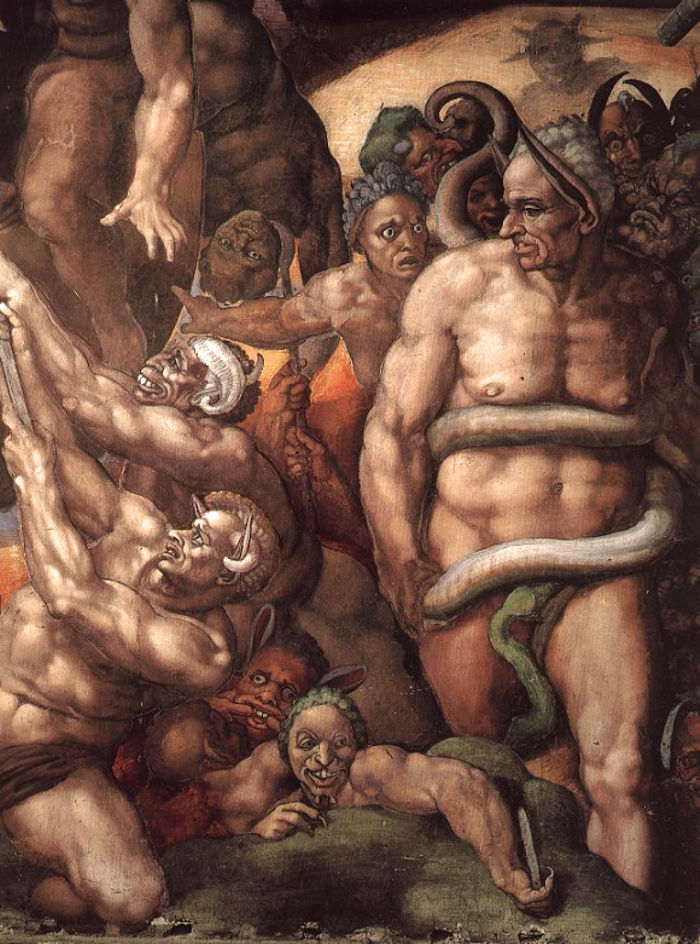
Days later, when Cesena returned to the chapel, the fresco had progressed. In the lower right corner, right at the entrance to hell, Michelangelo had painted Minos, the judge of the damned. But this was no ordinary Minos. It bore the exact face of Biagio da Cesena.
The humiliation was absolute: Michelangelo added enormous donkey ears, symbolizing his ignorance, and painted a monstrous serpent coiling around his body. But the detail that set the entire Vatican whispering was the end of the snake: the reptile is biting his genitals for all eternity. It was the clearest and most vulgar message an artist had ever sent to a critic.
Cesena, beside himself, ran to plead with Pope Paul III to force the artist to erase his image. It was then that the climax of this story occurred. The Pope, who deeply admired Michelangelo and perhaps enjoyed the artist’s wit, gave a response that has been etched into history: "My son, if he had put you in Purgatory, I could get you out with my prayers, but in Hell, my jurisdiction does not reach. You will have to stay there."
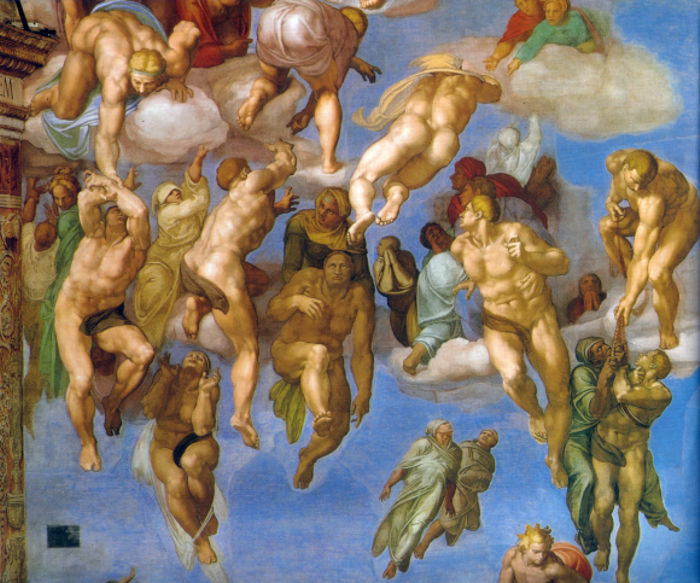
Anatomy as Theology: The Scandal of the Nudes
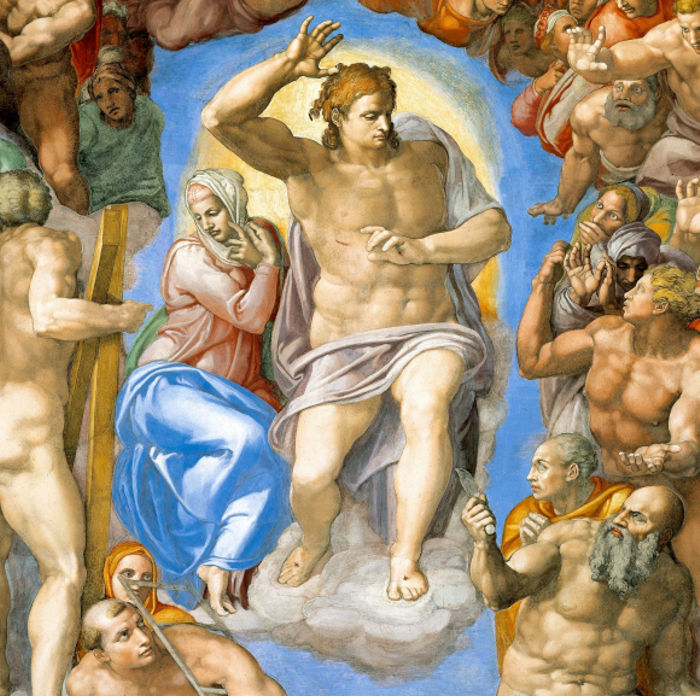
Beyond the Cesena anecdote, the Last Judgment was a cultural earthquake. Michelangelo broke all the conventions of the time. Instead of a Christ seated on a rigid throne, he painted a young, beardless Jesus with Herculean musculature, appearing as if he were delivering a physical blow against the damned. He is a God of action, not just of judgment.
The fresco is a sea of bodies. There are no landscapes, no traditional perspective; only flesh and muscle in motion. For Michelangelo, the human body was not something to be ashamed of, but a reflection of God’s perfection. However, after his death, the Vatican ordered the "shameful parts" to be covered with cloths painted by another artist, Daniele da Volterra, who forever earned the nickname "Il Braghettone" (the breeches-maker).
The Disturbing Self-Portrait: Saint Bartholomew
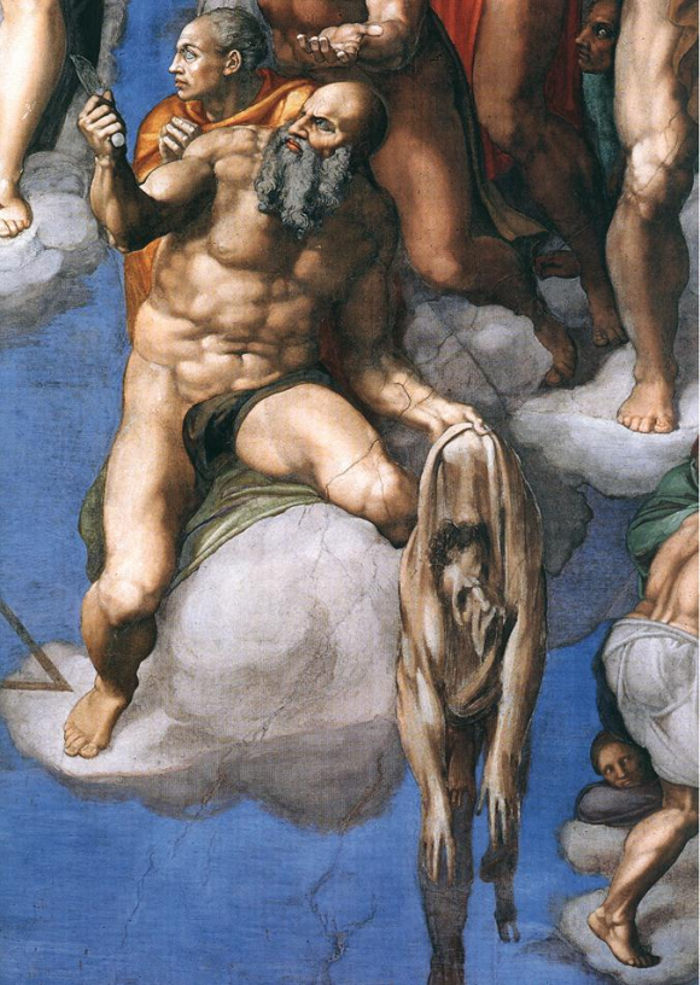
But the darkest and most personal part of the work is not Cesena’s hell, but Michelangelo himself. Near the center of the mural, beneath Christ’s feet, is Saint Bartholomew, who was martyred by being flayed alive. The saint holds the knife of his martyrdom in one hand and his own discarded skin in the other.
If you look closely at that hanging skin, you will see that the features do not belong to the saint, but to Michelangelo himself. It is a disturbing and agonizing self-portrait. Why would the man painting the glory of God portray himself as a piece of empty, dead skin? Some believe it was his way of expressing the physical and spiritual exhaustion of the work; others see a confession of his own unworthiness before divine judgment. It is the image of a man who feels "emptied" by his own art.
Curiosities the Human Eye Misses at First Glance
The Last Judgment is a box of surprises for those who know where to look. For example, on the side of the chosen ascending to heaven, there is a moving detail: two figures, one Black and one white, embrace as they rise. In the middle of the 16th century, Michelangelo was sending a message of racial equality before salvation that was extremely advanced for his time.
There is also the case of the saints' tools. Each martyr holds the object with which they were killed, but in Michelangelo’s hands, these look like weapons of war ready to be used against those who persecuted them. The tension in every muscle suggests that the Last Judgment is not a static event, but a burst of cosmic energy happening at this very moment.
Final Reflection: The Legacy of a Volcanic Character
To contemplate the Last Judgment is to peer into the mind of a man who feared neither popes nor demons, only his own creative demands. The story of Biagio da Cesena reminds us that art has the power to immortalize both beauty and ridicule. Cesena wanted to protect the Vatican's morals and ended up becoming the laughingstock of millions of tourists who, five hundred years later, still point at his donkey ears.
Michelangelo left us a clear lesson: you can criticize a genius, but be careful, because you might end up trapped forever on his canvas, suffering the bite of a snake while the whole world watches your condemnation.
te dejamos un video por aqui:
THE WORK
Title: The Last Judgment
Artist: Michelangelo Buonarroti
Year: 1536-1541
Technique: Fresco
Style: Mannerism / Late Renaissance
Location: Sistine Chapel, Vatican Museums