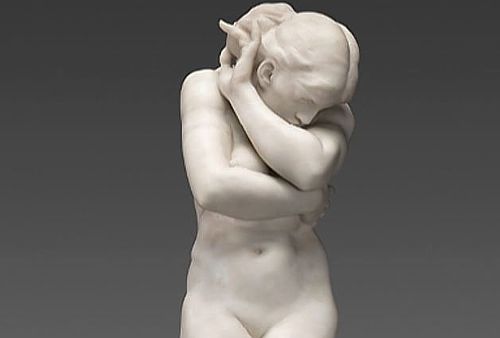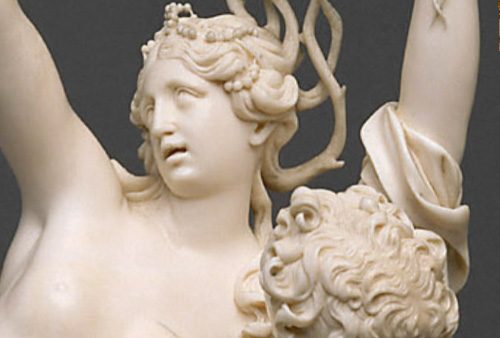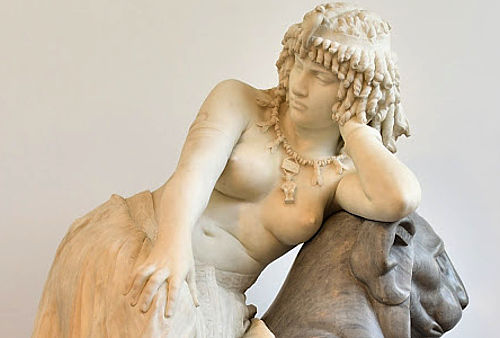


Some time ago, we published the story and work of The Rape of Proserpina by Bernini in La vida es Arte, a marvelous sculpture where unbridled passion was frozen in marble with the fervor of the Baroque. Now, it is the turn of another scene of abduction and sacrifice, that of Polyxena, a much darker story, charged with tragic love, vengeance, and the fatality that marked the bitter end of the Trojan War.
The central figure is Polyxena, a princess of Troy, daughter of the powerful King Priam and Queen Hecuba. Her life, brief and dramatic, was inextricably linked to the destiny of her city and to the figure of the greatest Achaean hero: Achilles. Greek mythology, always marked by ill-omened oracles, had prophesied that Troy would not fall if her brother, Troilus, managed to reach twenty years of age. Tragedy unfolded when Polyxena and Troilus fell into an ambush, and although Achilles killed the young man, she managed to escape, saving her life but condemning her fate.
The encounter between the Trojan princess and the Greek hero is covered by the veil of various narratives, all with a fatalistic end. The moment Achilles fell in love with Polyxena is a mosaic of versions that demonstrate her fatal power: Did it happen during the ambush where Troilus died? Or while she, innocent, participated in a rite in honor of Apollo? The most dramatic version, which underscores her nobility and despair, relates that, after the death of her brother Hector, Polyxena contributed to the rescue of her brother's body, throwing her jewels from the walls of Troy, or even personally offering herself to Achilles to become his slave in exchange for peace.
Love, Secret, and the Fatal Arrow in the Heel
Mythology is not clear on the exact details of the romance, but it is clear on its mortal consequences. It is said that, blinded by love, Achilles promised he would persuade the Achaeans to abandon the siege of Troy in exchange for marrying the princess. This promise sealed his own ruin. The most accepted tradition suggests that, during the exchange of courtship or perhaps under coercion, Polyxena may have discovered the secret of his vulnerable heel.
Let us briefly recall that Achilles' invulnerability was due to his mother, Thetis, immersing him in the River Styx to make him immortal, holding him by the heel. That small portion of flesh that never touched the waters remained vulnerable and was the key to his downfall. On one occasion, when Achilles was heading to meet Polyxena (possibly at a temple or neutral location outside the walls), the Achaean hero died in an ambush set by Deiphobus and Paris, with an arrow aimed at the fatal heel. Achilles' death, though avenged by the pain of a betrayed love, only prolonged Polyxena's misfortune.
The Post Mortem Demand: The Ghost's Exaction
After the final sack of Troy and as the Achaeans prepared to return home, the drama reached its climax. The ghost (eidolon) of Achilles appeared to the survivors of the war on the beach, demanding a sacrifice: Polyxena had to be immolated on his tomb before anyone could leave. This act was not merely vengeance; it was a ritual demand, a price for the safe passage of the fleet.
The sacrifice of the young woman had a double and cruel purpose: Propitiation, to secure favorable conditions for the return of the Achaean ships to Greece (a direct analogy to the sacrifice of Iphigenia on the outward journey), and Vengeance, to serve as a blood offering in honor of the fallen hero.
It was Neoptolemus, Achilles' son, who beheaded her over his father's tomb. The young woman, according to the moving version by Euripides, accepted her fate with impressive dignity. She requested that her body not be touched by slave hands and that she be executed with the same nobility with which she had lived. This acceptance of the sacrifice elevated her figure from a mere victim to a tragic martyr, a symbol of Trojan resistance that even death could not subdue.
Nevertheless, for those who preferred a narrative more connected to pure Romanticism, it was said that Polyxena had committed suicide after Achilles' death, plunging a sword into herself over his tomb, out of a love so great it transcended betrayal and war.
Pio Fedi in Florence: The Neo-Baroque Style and the Loggia dei Lanzi
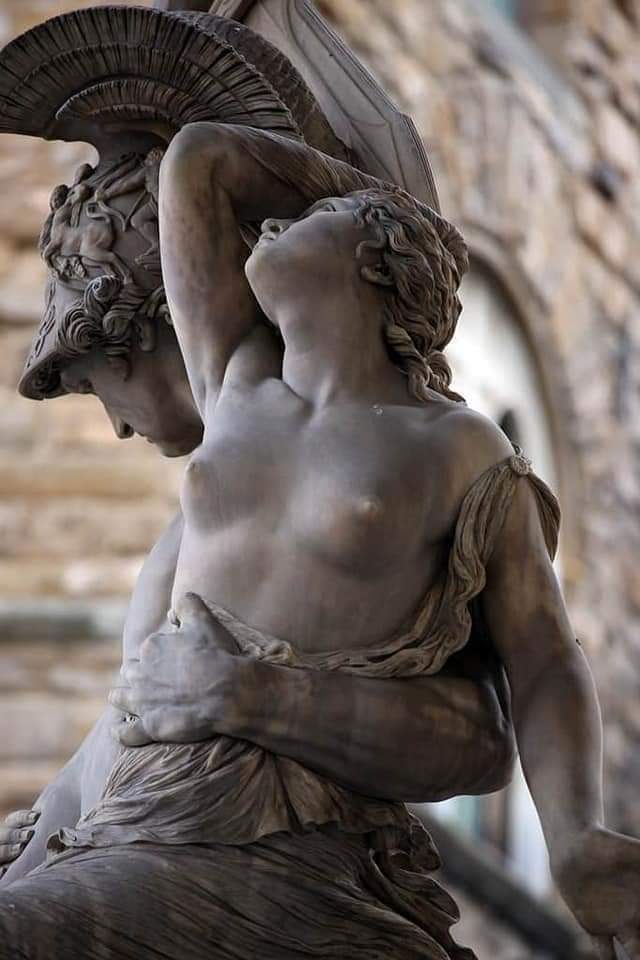
This story, charged with violence, love, and destiny, was immortalized by the Italian sculptor Pio Fedi (1816–1892). His work, The Rape of Polyxena (sometimes translated as The Abduction of Polyxena or The Sacrifice of Polyxena), was sculpted between 1860 and 1865, in the heyday of the second half of the 19th century, a period when official art wrestled between Neoclassical serenity and Romantic drama.
The work is exhibited in a place of immense honor: the Loggia dei Lanzi in Florence, in the Piazza della Signoria. Placing a relatively modern sculpture (from the mid-19th century) alongside masterpieces of the Renaissance and Mannerism such as Cellini's Perseus with the Head of Medusa and Giambologna's The Rape of the Sabine Women, was an immense recognition of Fedi's work and his ability to compete with the great masters. This was no accident: Fedi demonstrated an exceptional capacity to absorb and integrate styles in a grandiloquent manner, creating what is now categorized as Neo-Baroque or Dramatic Neoclassical.
Art critic E. J. D. B. Smith noted that Fedi consciously sought to reanimate the spirit of Hellenistic and Baroque sculpture, but with a polishing technique and compositional rigor that only late Neoclassicism could offer. The work is impactful precisely because of its high drama. Fedi blended multiple styles and traditions to construct a theatrical and multi-figure scene:
- Hellenistic Model: Fedi adopted the unrestrained emotion, the spiraling movement, and the muscular tension characteristic of late Greek sculpture.
- Mannerist Model: Similar to the works of Giambologna, the scene is a figura serpentinata that requires viewing from all angles to unravel the action—an essential characteristic of the Loggia's outdoor sculpture.
- Baroque Model: He infused it with a vitality and dynamism that brings it close to the fervor of the 17th century, featuring volatile draperies and exaggerated facial expressions to maximize the emotional impact.
Sculptural Analysis of the Marble Whirlwind
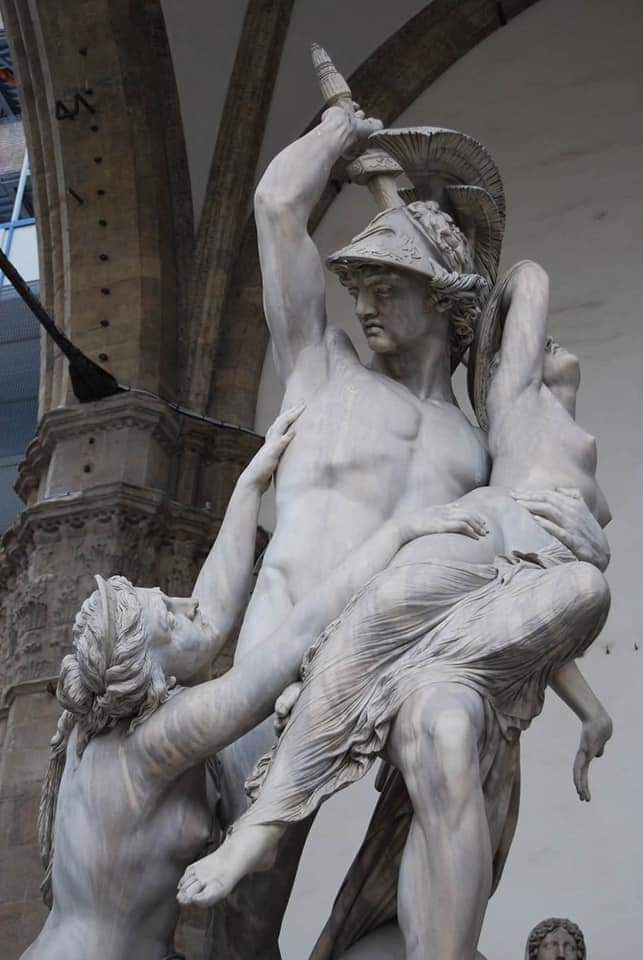
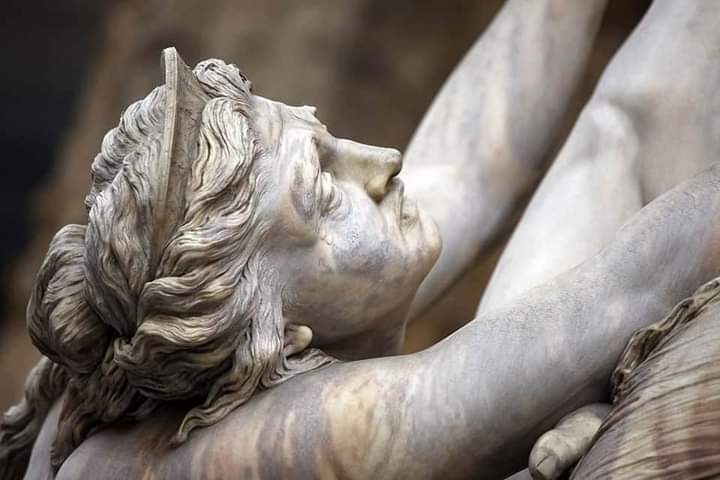
The scene represents the exact moment of the abduction for sacrifice. Neoptolemus, Achilles' son, lifts Polyxena to carry her to the altar, an act of ceremonial violence. The composition is a whirlwind of movement and agony. Neoptolemus is a powerful and muscular figure, contrasting sharply with the desperate and feminine figure of Polyxena, whose body arches in a final cry of anguish.
The other key figure is her mother, Hecuba, who lies on her knees in a gesture of absolute despair and futile resistance, clutching at Neoptolemus's leg—a dramatic device that amplifies the tension. The composition rises on a diagonal, creating a pyramid of action that culminates in Polyxena's vulnerability.
Fedi's genius lies in how he handles the marble to represent raw emotion and the dichotomy between strength and weakness. Hecuba's robes fall in heavy, dramatic folds, anchoring the earthly pain, while Polyxena's nude body is light and almost weightless, preparing for her tragic ascent. The confrontation between Neoptolemus's brutal force and the princess's vulnerability, along with the mother's despair, creates a visual tension that is difficult to match in the sculptural context of the 19th century.

The most prominent literary sources for the Greek legend of Polyxena are Ovid's Metamorphoses, Euripides' Hecuba, and Boccaccio's Famous Women. Fedi, like a scholar of his time, managed to infuse all this literary and emotional weight into the stone, creating a work that not only narrates a myth but evokes injustice, honor, and sacrifice with unparalleled power.
The Rape of Polyxena is, ultimately, a work that celebrates the capacity of art to capture the most intense moments of human destiny. Placed in an open-air museum, competing with the giants of the past, Pio Fedi's work demonstrates that the spirit of drama and passion, born in ancient Greece and revived in the fervor of the centuries, was still more alive than ever in the marble of 19th-century Italy, serving as a nexus between the legendary past and the artistic rebirth of modern Florence.
THE WORK
The Rape of Polyxena
Artist: Pio Fedi
Material: Marble
Date: 1860-1865
Location: Loggia dei Lanzi, Piazza della Signoria, Florence, Italy