

In the heart of the 19th century, an era of artistic revolutions and profound social change, there emerged a painter whose technical mastery and idealized aesthetics elevated him to the summit of academic art: William-Adolphe Bouguereau. At a time when realism challenged classical norms and impressionism emerged with loose brushstrokes and vibrant colors, Bouguereau remained faithful to the principles of academic tradition, refining his art with a meticulousness that seemed to defy the very nature of the canvas.
Born in 1825 in La Rochelle, France, Bouguereau showed exceptional talent for drawing from a very young age. His early years were marked by strict education and rigorous artistic training, elements that would shape his meticulous approach to painting. At the École des Beaux-Arts in Paris, he learned the foundations of classical drawing and composition, absorbing the Renaissance ideals that would define his work.
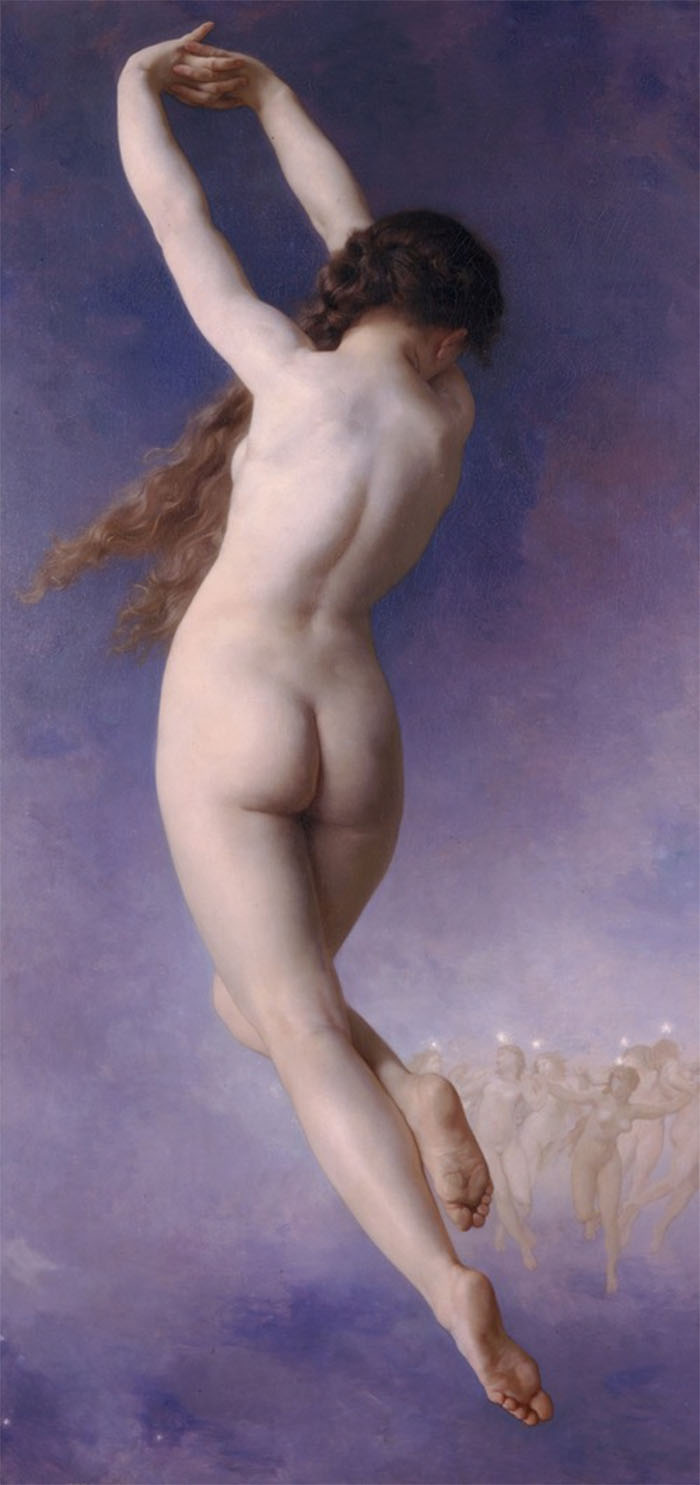
From the beginning, his art stood out for its pursuit of perfection. At a time when many artists were beginning to explore new visual languages, Bouguereau chose to look backward, toward the old masters. His impeccable technique, his ability to render skin with an almost ethereal softness, and his mastery of chiaroscuro allowed him to recreate scenes of idealized beauty, with human figures that seemed beyond the earthly realm. For him, painting was not only meant to capture reality, but to embellish it, exalt it, and elevate it to a higher level.
The art world of the 19th century was in constant transformation. Paris, the epicenter of Western culture, was a boiling pot of conflicting ideas. While the Impressionists challenged academic conventions and the Realists sought to portray the rawness of everyday life, Bouguereau remained unwavering in his commitment to tradition. In every brushstroke and every color nuance, one can perceive the dedication of an artist who conceived painting as a lofty art, a way to capture the essence of humanity in its most sublime expression.
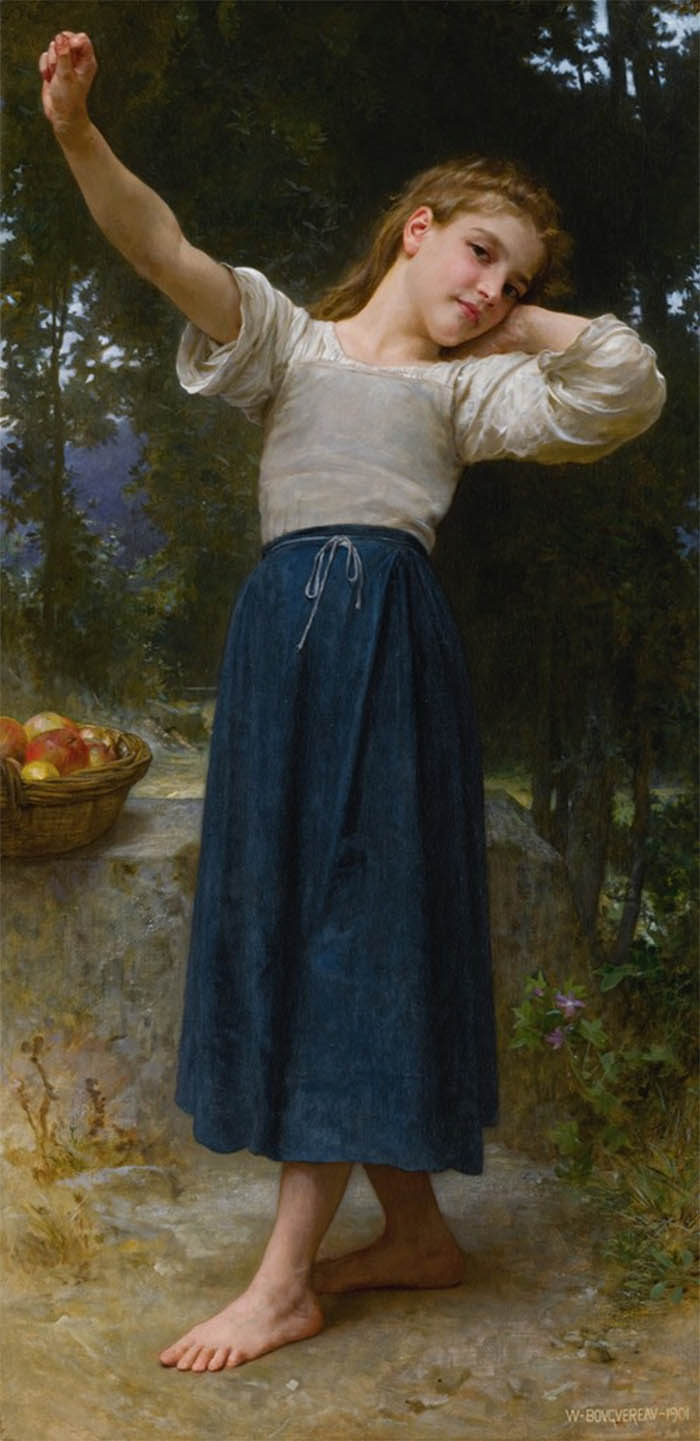
Academic art, the movement to which Bouguereau adhered with fervor, valued anatomical study, precise perspective, and the idealized representation of the human figure. Unlike emerging movements that sought to break away from the past, he saw classical tradition as an inexhaustible source of inspiration. His meticulous attention to detail, his ability to capture the softness of skin, the delicacy of fabrics, and the luminosity of human flesh made him a benchmark of the genre.
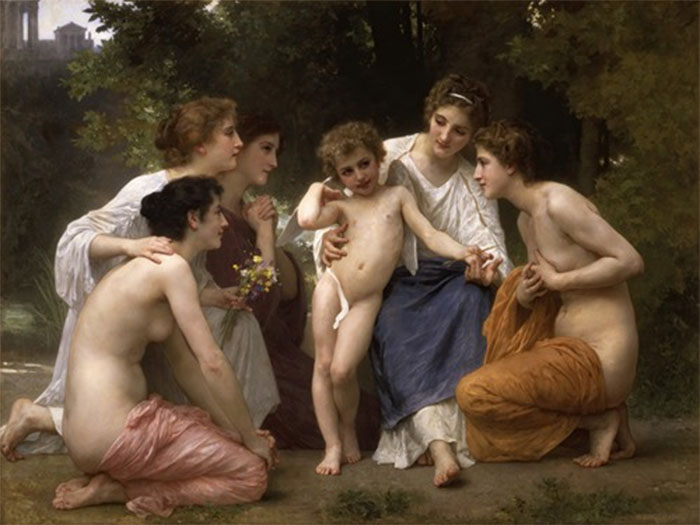
However, Bouguereau’s fidelity to these principles was not without controversy. As the avant-garde gained strength, critics and other artists began to view him as a symbol of the past, a representative of an art form that no longer aligned with the concerns of modernity. His flawlessly executed paintings were considered by some to be too refined, too perfect, at a time when spontaneity and experimentation were increasingly valued.
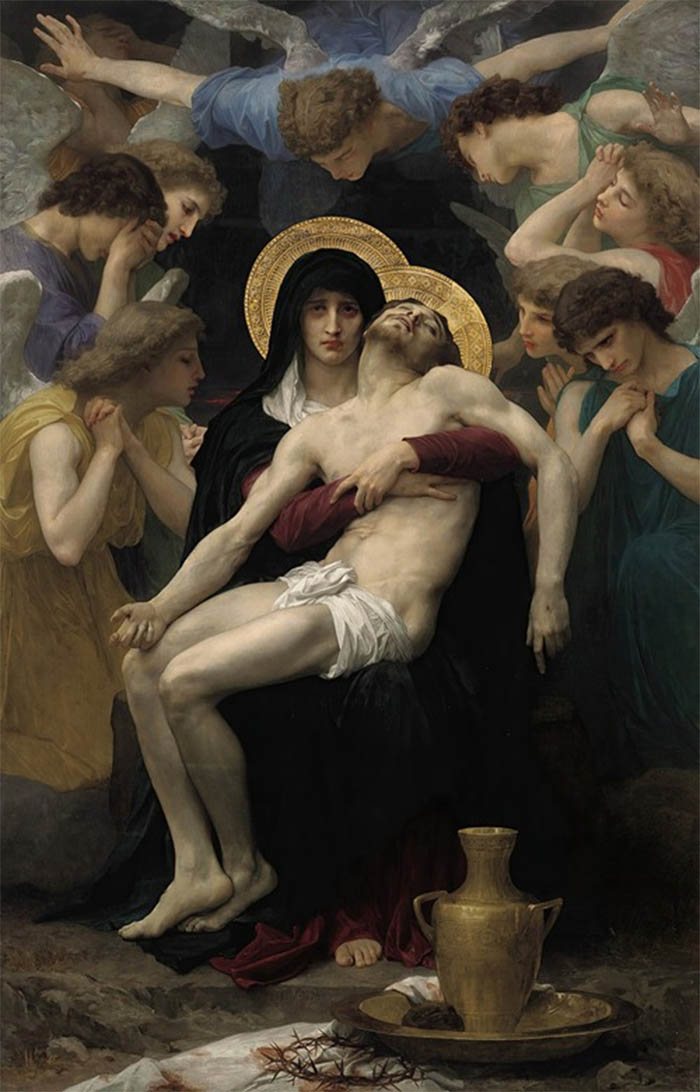
Despite these criticisms, Bouguereau achieved extraordinary success during his lifetime. His works were admired by the bourgeoisie and the aristocracy, and his exhibitions at the Paris Salon attracted large crowds. His paintings sold for high prices, and collectors from around the world longed to own a Bouguereau. In a society that valued idealized beauty and classical narrative, his art responded perfectly to these desires.
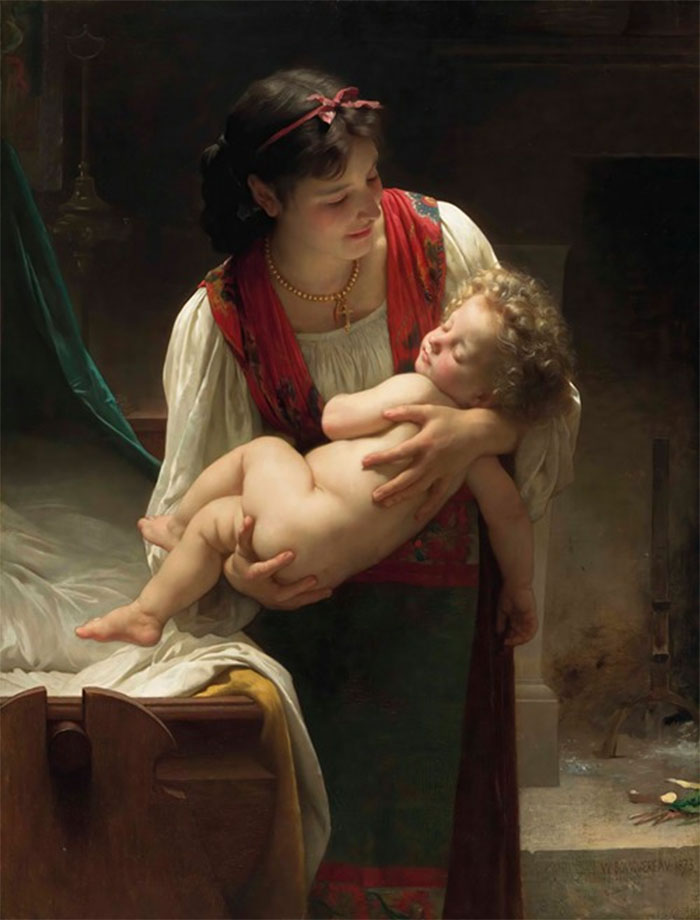
Beyond his technique and style, Bouguereau was a fervent advocate of artistic education. For years, he taught at the Académie Julian, one of the few institutions that admitted women to its classrooms. His commitment to training new generations of artists was one of his lesser-known, yet most significant, contributions. Unlike many academics of his time, Bouguereau believed in the inclusion of women in the art world and worked to ensure they had access to the same training as their male counterparts.
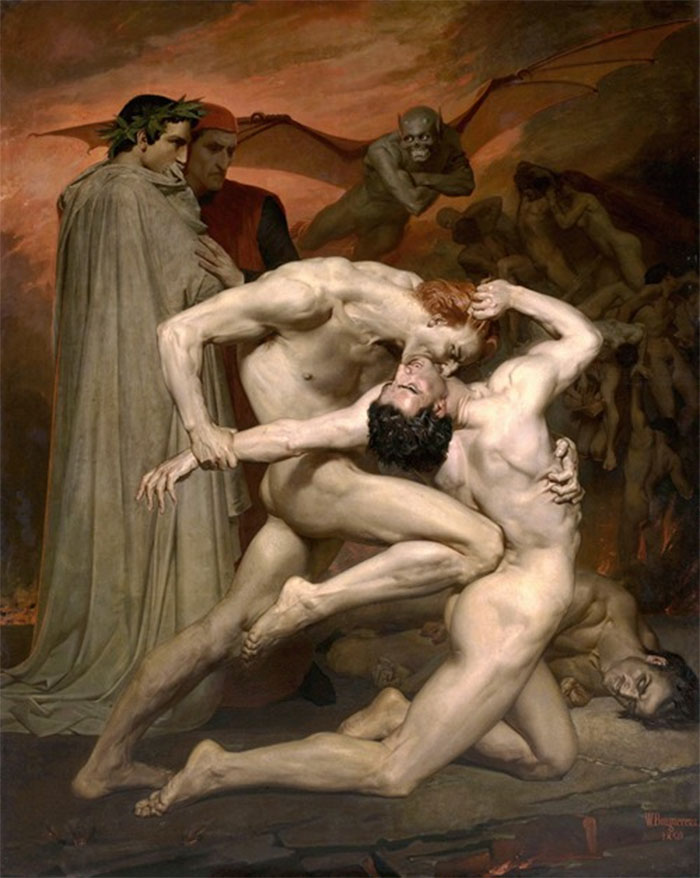
However, as the 20th century progressed, Bouguereau’s reputation began to fade. With the rise of modernism and the rejection of academic norms, his art was pushed into the background. Critics regarded him as a remnant of a bygone era, a relic of an academicism that no longer had a place in the new conception of art. His works were removed from museums, and his name was nearly forgotten, eclipsed by the innovators who followed him.
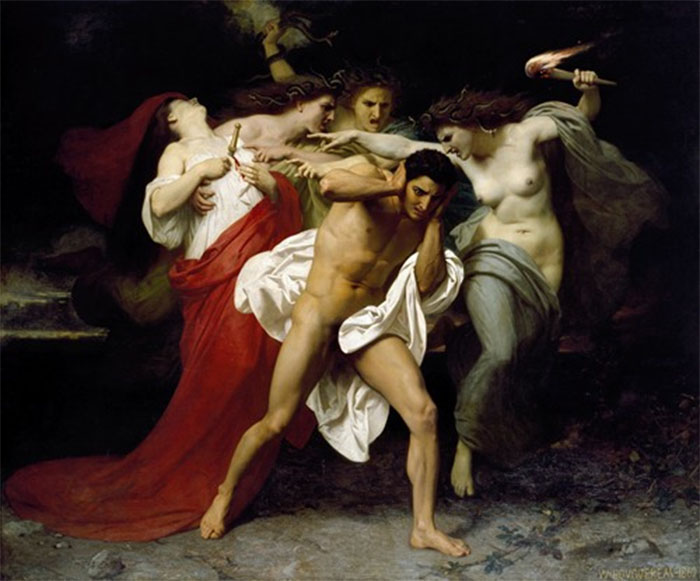
It was not until the late 20th century that his legacy began to be reassessed. With the renewed interest in figurative painting and the appreciation of technical skill, Bouguereau’s work was rediscovered by collectors, historians, and contemporary artists. His extraordinary ability to depict the human figure with unparalleled precision was once again recognized, and his paintings, once relegated to obscurity, returned to galleries and museums.
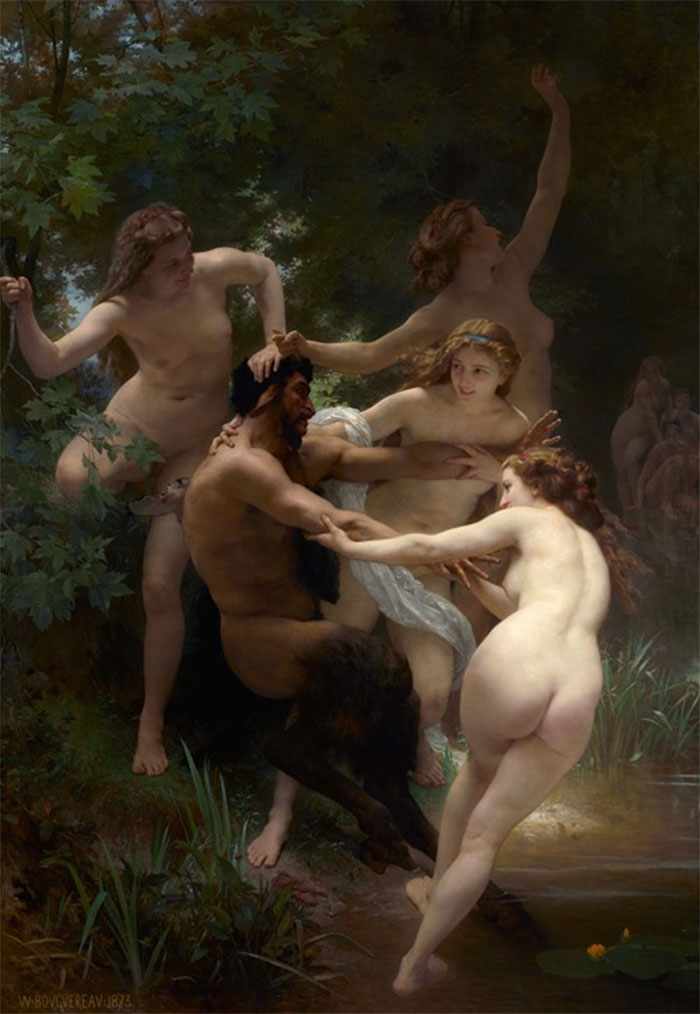
Today, Bouguereau is seen not only as a master of academicism, but as a symbol of the eternal tension between tradition and innovation in art. His work, once criticized for its perfection, is now admired for the very same reason. In a world where artistic movements change rapidly, his legacy reminds us that art is a reflection of its time, but also a testament to timeless beauty that transcends fashions and fleeting movements.
Bouguereau lived and died faithful to his vision of art. For him, painting was not merely an expression of reality, but a celebration of perfection, a tribute to the human form at its highest expression. His name, once cast into the shadows, shines once again, reclaiming the place it deserves among the great masters of art history.