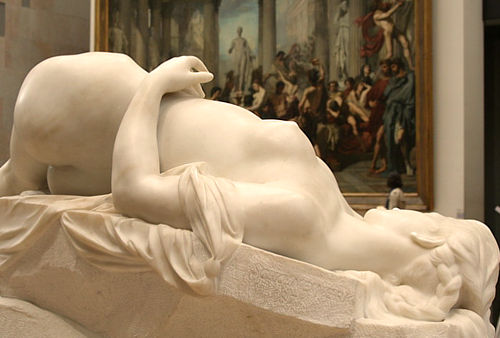


To speak of :contentReference[oaicite:0]{index=0} (1823–1889) is to dive into the heart of nineteenth-century academic art. He was the painter who, like few others, embodied the aesthetics of idealized beauty, refinement, technical perfection, and the brilliance of French painting during the Second Empire. His works are, at once, symbols of an art that dominated official salons and academies, and testimony to a style that would soon be challenged by the rising wave of Impressionist modernity.
But unlike many of his contemporaries, Cabanel never sought scandal. His goal was not to break with tradition, but to seduce. And seduce he did: his paintings were so admired by the public and the powerful that even Emperor Napoleon III counted him among his favorites.
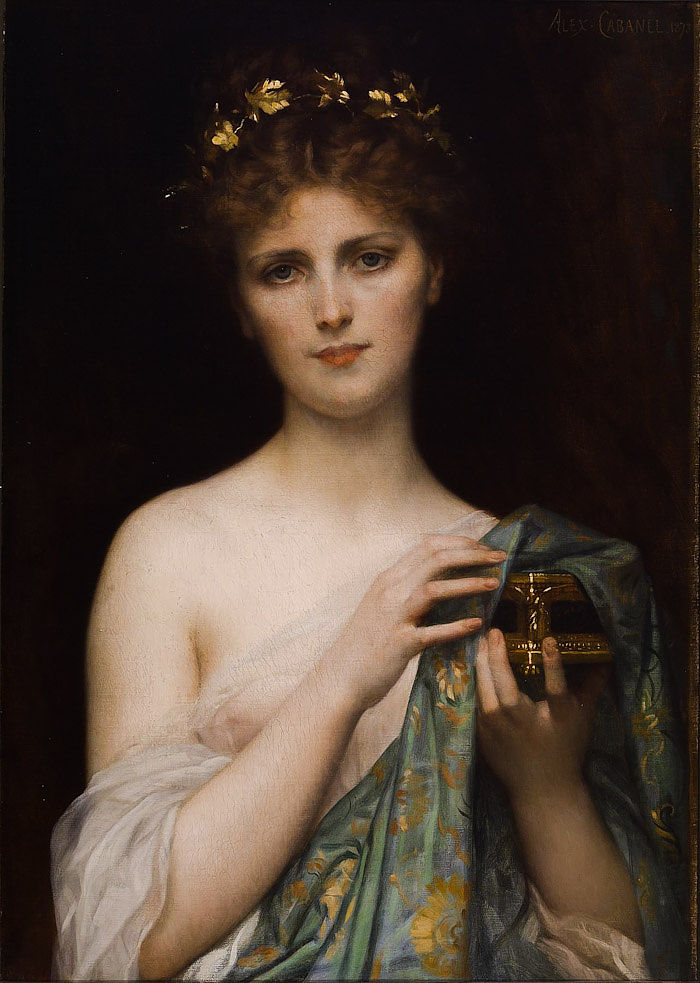
A child prodigy in Montpellier
Cabanel was born in 1823 in Montpellier, a city in southern France. From a very young age he showed extraordinary talent for drawing, which led him to enroll at the local School of Fine Arts. His path seemed clear: Paris.
At just sixteen he moved to the capital, where he entered the École des Beaux-Arts and became a pupil of François-Édouard Picot, a neoclassical painter who passed on to him the foundations of academicism: anatomical precision, mastery of chiaroscuro, and the importance of noble subjects.
Cabanel absorbed these lessons eagerly. At twenty he was already competing for the Prix de Rome, the highest academic honor, and he won it in 1845. The prize allowed him to reside at the Villa Medici in Rome, where he studied the masterpieces of the Renaissance and the Baroque firsthand. There he forged an ideal: painting should aspire to the sublime, serving as a vehicle for beauty, grace, and elevation.
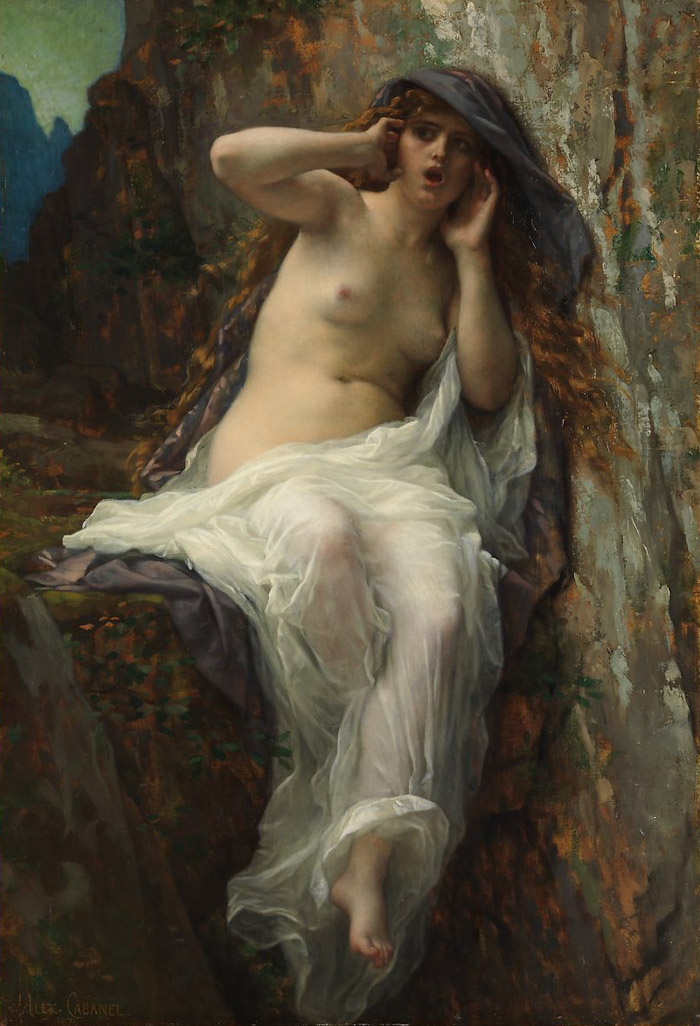
Triumph in Paris
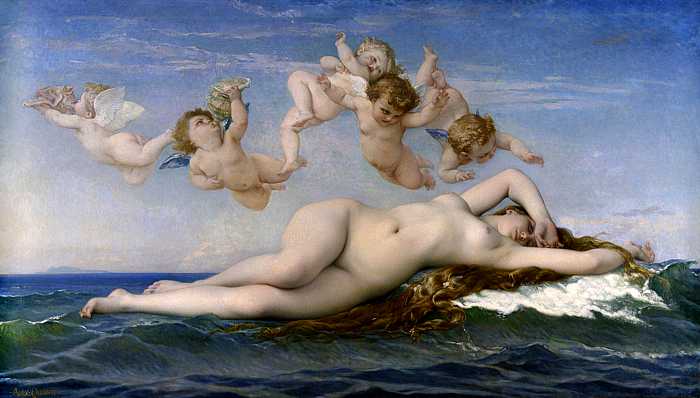
Upon returning to France, Cabanel began exhibiting at the Paris Salon, the great showcase of official art. His success was meteoric. In 1863 he presented his most famous work: The Birth of Venus, a monumental canvas in which a nude goddess emerges from the waves, surrounded by cherubs.
The painting dazzled the public. Its model, with her soft body and angelic face, seemed to encapsulate everything academicism sought: formal perfection, restrained sensuality, and classical harmony. The painting was acquired by none other than Napoleon III, who placed it in his private collection.
Curiously, that same year another painter presented a very different work at the Salon: Édouard Manet with his Luncheon on the Grass, rejected by the jury and which gave rise to the famous Salon des Refusés. While Manet and the future Impressionists struggled to carve out a new path, Cabanel stood as the official representative of the art Paris applauded and political power rewarded.
The painter of Venuses and emperors
The Birth of Venus was not an isolated case. Cabanel painted several versions of the mythological theme, all bearing his personal stamp: soft bodies, pearly skin, and an idealization that turned sensuality into something almost spiritual.
The public acclaimed him as “the painter of Venus,” but Cabanel was also a skilled portraitist. His clientele included the elite of society: aristocratic ladies, politicians, financiers, and of course, the imperial family.
One of his most celebrated portraits is that of Empress Eugénie, wife of Napoleon III, whom he immortalized with majestic elegance. His portraits were not simple likenesses of the model: they were symbolic constructions, in which the sitter appeared ennobled, transformed into an ideal of beauty.
The feared and revered professor
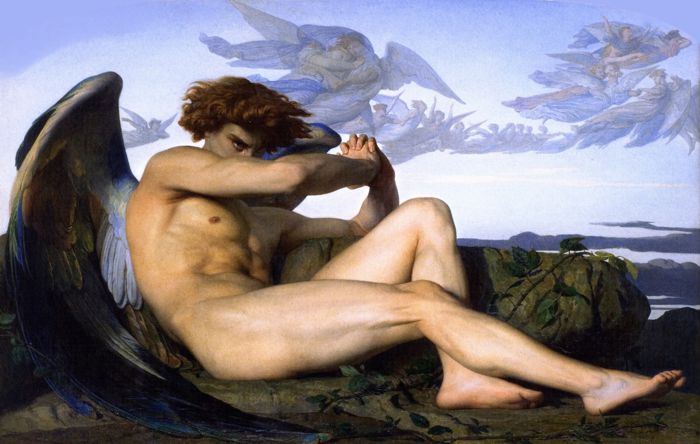
In addition to being a successful painter, Cabanel was an influential professor at the École des Beaux-Arts. His position granted him enormous power: he served as a Salon juror and trained generations of artists. Many young painters longed to enter his studio, because his endorsement could open the doors to official recognition.
Cabanel imposed discipline, insisted on precise drawing, and emphasized the need to respect academic canons. His detractors accused him of stifling creativity and acting as a guardian of conservatism. His students, however, received solid training that later allowed them to develop their own paths.
The shadow of the Impressionists
In the 1870s, while Cabanel continued accumulating honors and commissions, a group of independent artists — Monet, Renoir, Degas, Cézanne — began to revolutionize painting. In contrast to academic idealization, they proposed immediacy, shifting light, and everyday reality.
Cabanel dismissed these proposals. He considered the Impressionists little more than amateurs who lacked mastery of the craft. For him, painting had to be noble, serious, and rigorous. This opposition turned Cabanel into a symbol of the “official art” against which the moderns rebelled.
Over time, history would grant greater prominence to the Impressionists, relegating Cabanel to the role of antagonist. But reducing him to that alone would be unfair: his technical mastery and his ability to captivate an entire era are undeniable.
The aesthetics of beauty
What made Cabanel so special? His obsession with beauty.
In his paintings, bodies seem bathed in an ethereal light. The skin is translucent, the contours soft, the gazes delicate. Cabanel ensured that sensuality never became vulgar; even his nudes seem destined for an altar rather than a boudoir.
His favorite subjects were mythology, biblical history, and aristocratic portraits. He always sought the same goal: to create an image that inspired admiration, an ideal of perfection. In this sense, Cabanel was the last great representative of a tradition that stretched back to the Renaissance, filtered through the refinement of the nineteenth century.
Final years and legacy
Cabanel died in 1889, at the age of 66. By then, the Impressionist tide had already captured much of the public and critical attention. His style was beginning to be seen as outdated. Nevertheless, he never lacked admirers.
Today, his work can be found in museums such as the Musée d’Orsay in Paris, the Metropolitan Museum of Art in New York, or the Musée Fabre in Montpellier, his hometown. There one can appreciate that, beyond aesthetic debates, Cabanel was a virtuoso of the brush, a creator of images that radiate grace and perfection.
A contemporary perspective
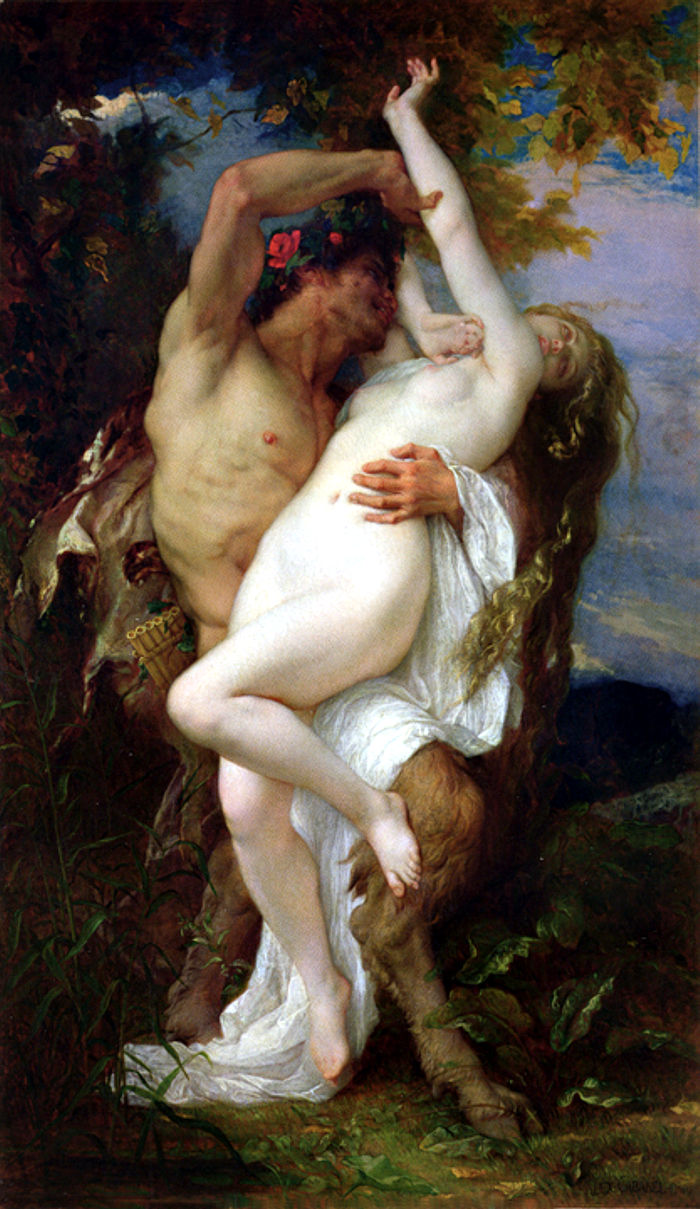
In the twenty-first century, Cabanel has undergone a reevaluation. Although he is no longer regarded as an innovator, his technical talent and his ability to synthesize the spirit of his time make him a key figure for understanding nineteenth-century art.
His Venuses, with their blend of innocence and sensuality, can today be seen as symbols of how academicism idealized the female body, transforming it into an object of contemplation rather than a subject of action. Yet they also remind us that painting can be a language of seduction, a bridge toward the eternal.
Cabanel is, ultimately, a reminder that art does not always need to be revolutionary to be memorable. Sometimes, it is enough to be beautiful.
Alexandre Cabanel was a painter who earned the admiration of emperors, aristocrats, and the general public thanks to his absolute mastery of technique and his ability to embody the idea of beauty on every canvas.
His life and work are also a mirror of his time: a century in which academic art coexisted with the emergence of radically new movements. While some looked to the future with rapid brushstrokes and vibrant colors, Cabanel looked to the classical past and reinvented it with a touch of modern softness.
Today, more than a century after his death, he remains the painter of the ideal, the artist who, with every stroke, sought to reach absolute beauty.