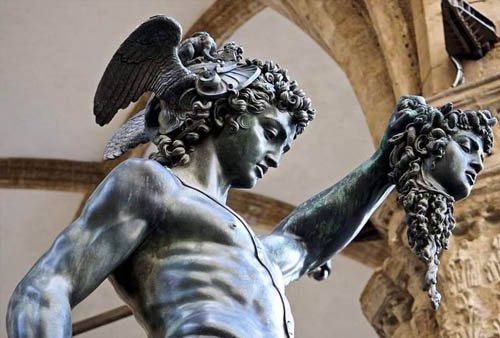
There is a sculpture in the heart of Florence that seems to breathe. A young man cast in bronze holds aloft a severed head, crowned with serpents, its eyes still half-open as if the instant of decapitation had not yet ended. Legend has it that whoever dares look into those stone eyes meets the same fate as its victims.
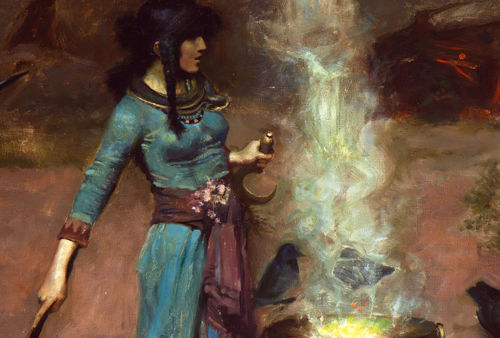
The Magic Circle is one of the most evocative and mysterious works by English painter John William Waterhouse, created in 1886. Waterhouse, known for his fondness for mythological and classical literary themes, captures a scene steeped in mysticism and enchantment that has intrigued and fascinated audiences since it was first shown. Waterhouse painted The Magic Circle at a time when the Pre-Raphaelite movement, which had inspired him, had already given way to newer forms of artistic expression.
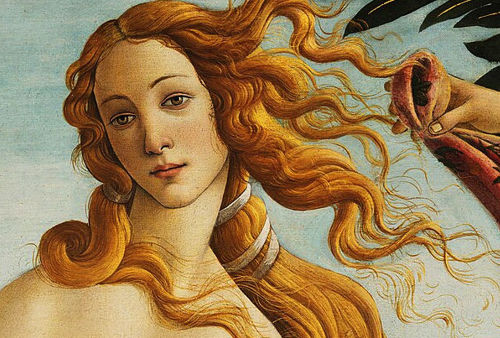
Venus had no mother. She was born of the sea, from the foam that formed when Cronus threw the remains of his father Uranus into the ocean. From that mixture of water, foam, and divinity, Aphrodite emerged — the goddess the Romans would later call Venus. Sandro Botticelli chose to paint exactly that instant: the moment a newborn goddess first sets foot in the world of men.
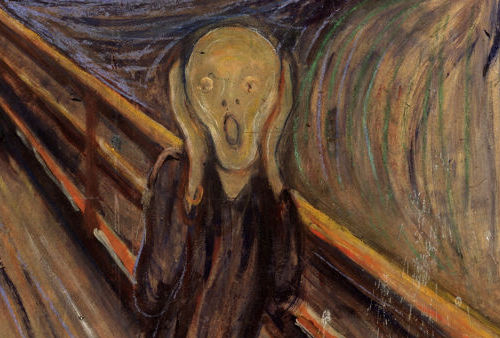
Some images become permanently etched into humanity's collective memory. A sinuous figure on a bridge, a sky burning in shades of blood and fire, two distant silhouettes walking on with indifference, and a central figure clutching its head with wide, hollow eyes. Almost anyone in the world instantly recognizes Edvard Munch's The Scream.
The day was gray and heavy, as if even the sky mourned what was about to happen. Lady Jane Grey, a young woman of barely seventeen who had been proclaimed Queen of England for a brief and turbulent nine days, sat alone in a small stone cell in the Tower of London. Her slender, fragile figure was wrapped in a simple white dress, a symbol of purity that contrasted sharply with the darkness of the walls around her.
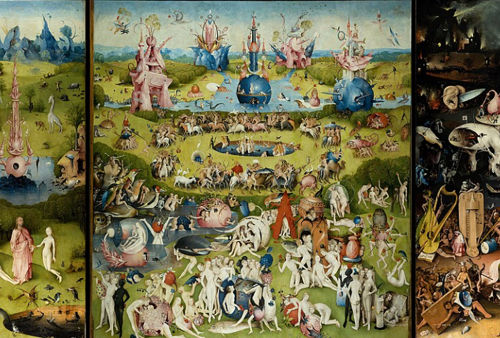
Some paintings are simply looked at. Others are wandered through. And then there's The Garden of Earthly Delights, by Hieronymus Bosch, a work so dense with details, creatures, and symbols that not even five hundred years of study have managed to fully agree on what it actually means.
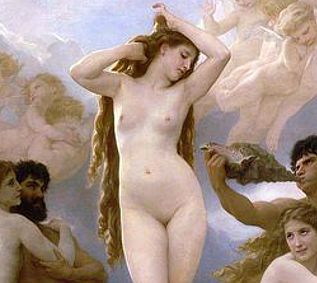
Bouguereau pinta una Venus Anadyomene: una diosa del amor y la belleza que emerge de la espuma del mar, cerca de Cythera. El mito evoca la unión de Zeus y Dione. Venus representa el eterno femenino que...
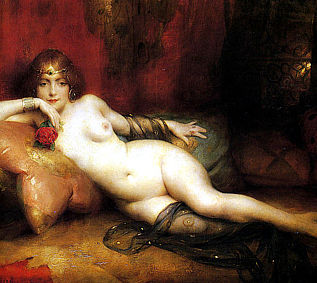
El Harén del árabe harīm, en los países musulmanes, es la parte de una casa reservada para las mujeres de la familia. Aunque en el pensamiento occidental suele asociarse con las prácticas...
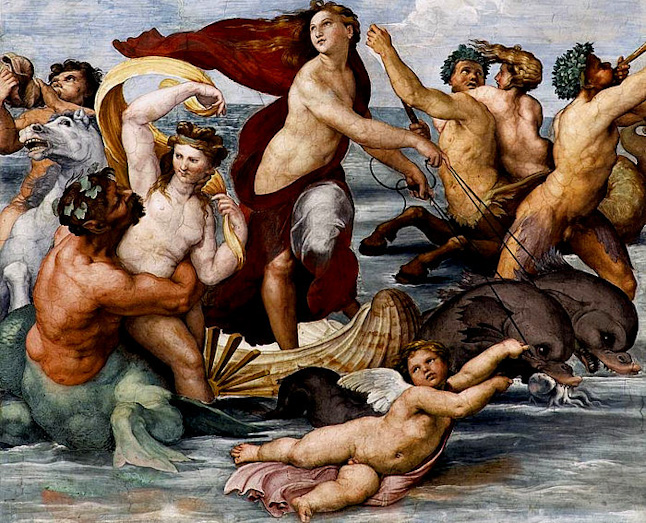
El vestido rojo hinchado por el viento, similar a una vela, el cuerpo escultural, los brazos extendidos para guiar a los delfines que tiran del carro en forma de concha sobre el agua, mientras una...
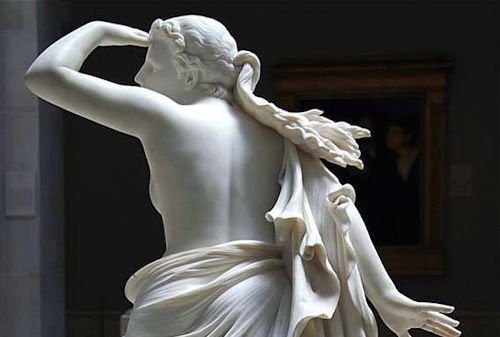
Mi nombre es Dafne, hija del río Peneo, una ninfa cuya vida se vio trastornada por el deseo no deseado de un dios. Vivía felizmente en los bosques, disfrutando de la libertad y la naturaleza....
Durante milenios, las Pléyades, también conocidas como las Siete Hermanas han sido inmortalizadas en el famoso cúmulo estelar del mismo nombre, han sido objeto de asombro y fascinación en todo el...
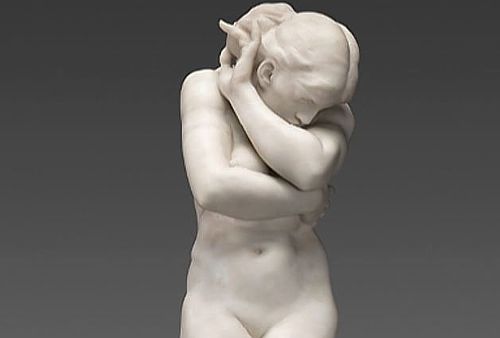
La figura de Eva ha sido una constante en el arte, un símbolo de la primera mujer bíblica y su rol en el mito del pecado original. Auguste Rodin, el renombrado escultor francés, tomó esta historia...
En los rincones más remotos de los bosques antiguos y los paisajes exuberantes, donde los arroyos fluyen con gracia y los árboles susurran secretos ancestrales, habita un grupo de seres mágicos...
Sumérgete en un viaje emocionante donde la creatividad y la belleza artística se fusionan para dar vida a narraciones atemporales que siguen cautivando al mundo moderno. Desentrañamos los secretos ocultos detrás de estas obras icónicas y te llevamos en un recorrido único por la intersección entre mitología y genialidad artística.¡Déjate inspirar por la riqueza cultural que perdura a través de los siglos !