Do you really think social media invented scandals and gossip? Of course not! In the 18th century, they were everywhere, and this masterpiece by Jean-Honoré Fragonard is the perfect example that the French aristocracy knew exactly how to have fun (and how to hide it). Life is Art, but sometimes, art is the evidence of the crime.
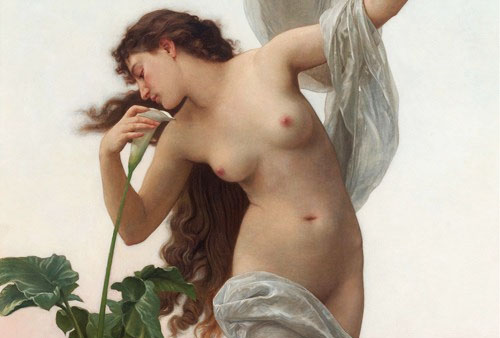
In the heart of the 19th century, an era of artistic revolutions and profound social change, there emerged a painter whose technical mastery and idealized aesthetics elevated him to the summit of academic art: William-Adolphe Bouguereau. At a time when realism challenged classical norms and impressionism emerged with loose brushstrokes and vibrant colors, Bouguereau remained faithful to the principles of academic tradition, refining his art with a meticulousness that seemed to defy the very nature of the canvas.
Among all the disturbing images that Francisco de Goya painted at the end of his life, few are as unsettling as The Witches’ Sabbath. There is no heroism, no classical beauty, and no decorative intention. There is fear, superstition, and an uncomfortable feeling: the sense of looking at something that was never meant to be seen.
Before Goya painted horror, horror already existed. It lived in myths, in the stories ancient civilizations used to explain the unexplainable: time, violence, power, and the fear of losing it all. Saturn —Cronos to the Greeks— was not a monster. He was a god. The god of time. And like every god who rules over something that cannot be stopped, he was condemned to paranoia.
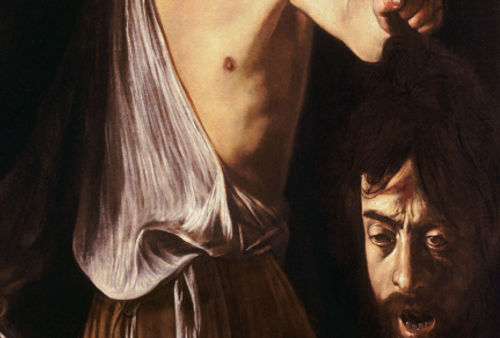
La oscuridad no era para Michelangelo Merisi da Caravaggio una simple técnica pictórica; era su refugio, su condena y, finalmente, su propia piel. En el ocaso de su vida, acosado por sus demonios internos y por la justicia de los hombres, el genio del tenebrismo nos entregó una de las piezas más perturbadoras y lúgubres de la historia del arte: David con la cabeza de Goliat. Pero tras la superficie de este lienzo barroco no solo hay pintura, hay una confesión de asesinato bañada en sangre y sombras.
Imagine entering a duke’s pleasure palace only to be confronted with one of the most disturbing visions in Spanish art. It is not a hunting scene or an idyllic landscape; it is three semi-naked men floating in a suffocating void while they devour a victim who seems to have lost all hope. This is the essence of Witches' Flight, a work where Francisco de Goya decided that true terror does not come from the beyond, but from the darkness that dwells within the human mind.
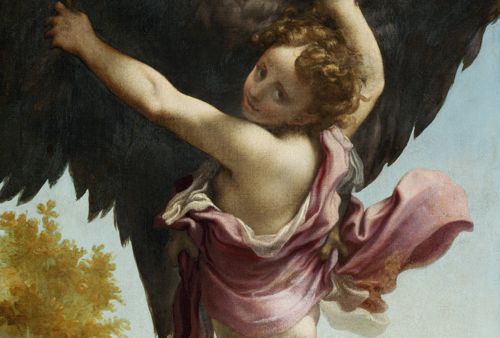
Entre las grandes joyas del Renacimiento italiano, la pintura mitológica destacó como un género que se extendió con rapidez por las cortes europeas. Un ejemplo representativo es El rapto de...
Cada tanto nos atrapa el sentimentalismo y publicamos historias relacionadas con el amor. La mitología tiene mucho de ésto y si bien son pocos los mitos que terminan con una cena de perdices, hay...
En lo más profundo del Hades, donde las sombras danzan entre los lamentos de los mortales, habitan tres figuras envueltas en el misterio del destino. Son las Moiras, las antiguas tejedoras del hilo de la...
John William Waterhouse, uno de los principales representantes del prerrafaelismo tardío, logró capturar en sus obras un equilibrio perfecto entre el arte y la literatura. En cada uno de sus...
En 2003, el Telescopio Espacial Hubble tomó una fotografía de Marte, el planeta rojo en su aproximación más cercana a la Tierra en 60.000 años, la imagen que encontrarás en la publicación. La...
Romeo y Julieta, es sin dudas la más icónica sobre el amor escrita por William Shakespeare en el siglo XVI, ha resistido el paso del tiempo para convertirse en un símbolo eterno de pasión y...
En las polvorientas llanuras de Tesalia, cuna de héroes y leyendas, la historia de Aquiles se despliega como un relato épico que ha resistido el paso de los siglos. Hijo de Peleo, rey de los...
En el corazón de una vasta y antigua selva, se encontraba el místico Lago Esmeralda. Rodeado por colinas cubiertas de árboles frondosos y flores silvestres, el lago resplandecía con un verde...
Sumérgete en un viaje emocionante donde la creatividad y la belleza artística se fusionan para dar vida a narraciones atemporales que siguen cautivando al mundo moderno. Desentrañamos los secretos ocultos detrás de estas obras icónicas y te llevamos en un recorrido único por la intersección entre mitología y genialidad artística.¡Déjate inspirar por la riqueza cultural que perdura a través de los siglos !