La tragedia de Ícaro
- Details
- Pinturas
- 5035

Mi nombre es Dédalo, y soy conocido como uno de los más grandes inventores y arquitectos de la antigua Grecia. Mi vida ha sido una serie de éxitos y fracasos, de ingeniosas creaciones y trágicos...


Art / Culture / Mythology / Cinema / Books
Select your language

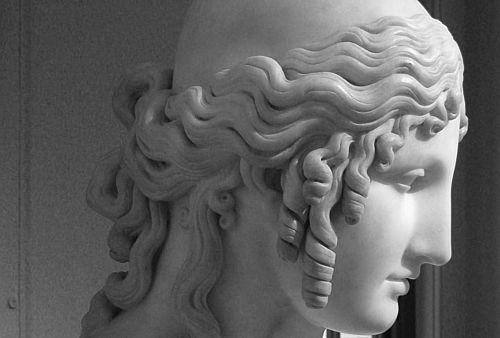
Zeus, the sovereign of Mount Olympus, the one who wields the thunderbolt and rules the sky, was the most powerful god, but also the most prolific. His insatiable appetite for love—whether with goddesses, nymphs, or mortal women—made him the father of a vast progeny. This is not a simple biographical detail; Zeus's offspring is, in essence, the structure upon which all mythology, theater, and art of Western civilization are based. Each of his children, whether Olympian gods or mortal heroes, represents a fundamental facet of human and divine existence.
Read more … The Children of Zeus: The Progeny That Shaped the Universe and Classical Art

Hades, called Pluto by the Romans, was the god of the Greek underworld, the land of the dead in Greek and Roman mythology. While some modern religions view the underworld as hell and its ruler as the embodiment of evil, the Greeks and Romans saw the underworld as a place of inescapable darkness. Though hidden from daylight and the living, Hades himself was not evil. Instead, he was the guardian of the laws of death, a somber but rigorously just sovereign.
Read more … Dante and Virgil in Hell: From Hades, the Just Sovereign, to Bouguereau's Eighth Circle
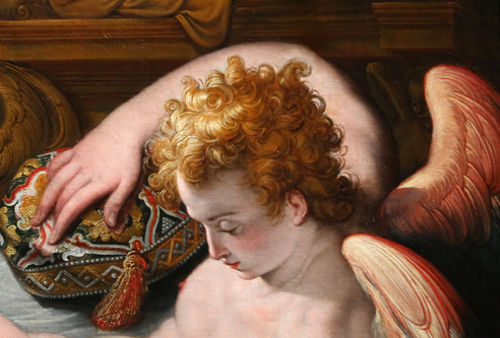
The story of Cupid and Psyche is, perhaps, the most beautiful allegory ever told about the human soul's journey toward immortality. The plot begins with Psyche, a king's daughter, whose beauty was so overwhelming that the people of her kingdom spoke only of her and, in doing so, forgot to follow the cult and adoration of Venus (Aphrodite), the goddess of love and beauty. The goddess, feeling outraged by this rivalry born of mortality, sends her son, Cupid (Eros), the god of desire, to punish the insolent girl.
Read more … Cupid and Psyche: The Soul's Ascent Through Passion and Curiosity
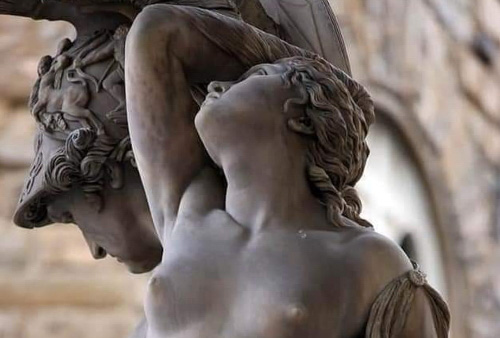
Some time ago, we published the story and work of The Rape of Proserpina by Bernini in La vida es Arte, a marvelous sculpture where unbridled passion was frozen in marble with the fervor of the Baroque. Now, it is the turn of another scene of abduction and sacrifice, that of Polyxena, a much darker story, charged with tragic love, vengeance, and the fatality that marked the bitter end of the Trojan War.
Read more … From Beauty to Sacrifice: The Inescapable Destiny of Polyxena
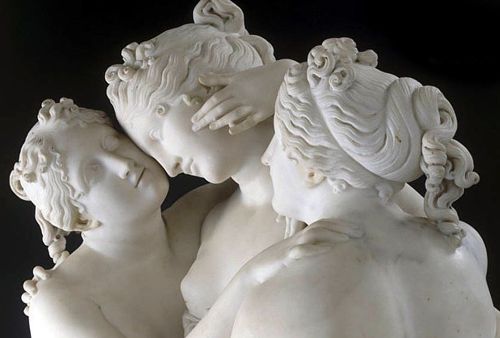
In the firmament of mythology, there exists a constellation of figures whose light lies not in destructive power or martial glory, but in the subtle, yet essential, vibration of amiability and beauty. They are the Three Graces, or Charites in the immortal language of the Greeks, and their legend is not one of conflict, but of perfect harmony. They are the rhythmic pulse of existence that celebrates the gift, the joy, and the radiant manifestation of grace. Their story is, in essence, the poetry of life itself, distilled into three female forms whose embrace has been perpetuated through the centuries.
Read more … Canova's The Graces: The Eternal Dance of Beauty, Joy, and Splendor Captured in Marble
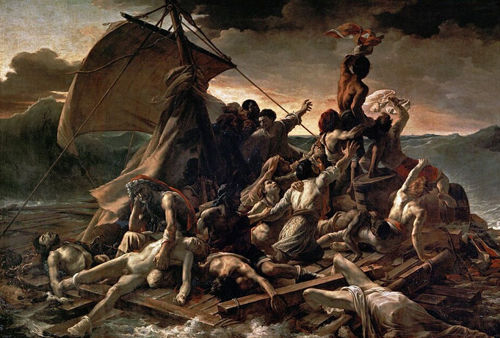
Romanticism, which flourished approximately between the late 18th century and the mid-19th century, was not just an artistic fashion; it was a cultural revolution that encompassed literature, music, and, of course, painting. It was born as a passionate reaction against the cold logic, strict order, and rationality imposed by Neoclassicism. If the Neoclassicists sought perfection in symmetry and the rules of Greco-Roman antiquity, the Romantics sought truth in a much deeper and more turbulent place: sentiment, imagination, and uncontrollable emotion.
Read more … The Roar of Feeling: Exploring Drama, Nature, and Passion in Romanticism Painting
Page 11 of 14
Mi nombre es Dédalo, y soy conocido como uno de los más grandes inventores y arquitectos de la antigua Grecia. Mi vida ha sido una serie de éxitos y fracasos, de ingeniosas creaciones y trágicos...
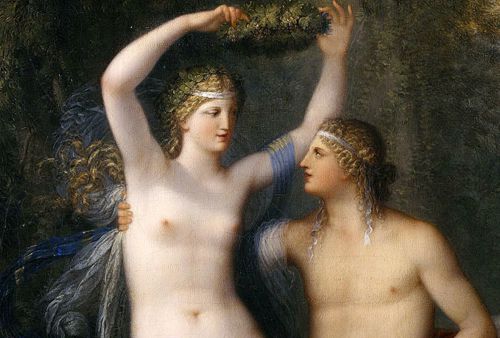
Ariadna estaba a cargo del laberinto que albergaba al Minotauro, una bestia feroz y con un carácter muy difícil. Atenas necesitaba sacrificar a siete hombres y siete mujeres, entre periodos de siete a...
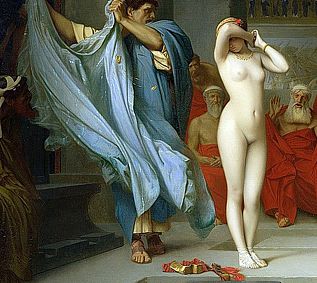
Friné fue una notable hetaira, o cortesana, de Atenas, que ha sido recordada a lo largo de los milenios por un dramático juicio que ganó al ser desnudada ante los jueces. Su nombre real era...


Read more … La Epopeya de Urania: La Musa que Danza con las...
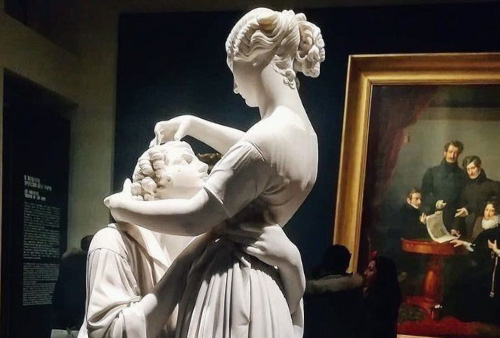
La historia de Paolo y Virginia, escrita por Jacques-Henri Bernardin de Saint-Pierre, es un relato romántico y conmovedor que narra la vida de dos jóvenes que crecen juntos en la isla de Mauricio, en el...

El tema de la "Psique desmayada" está tomado de un episodio de las "Metamorfosis" de Apuleyo, principal fuente literaria del mito, en el que se dice que Psique, una niña mortal, se une con Cupido, hijo...
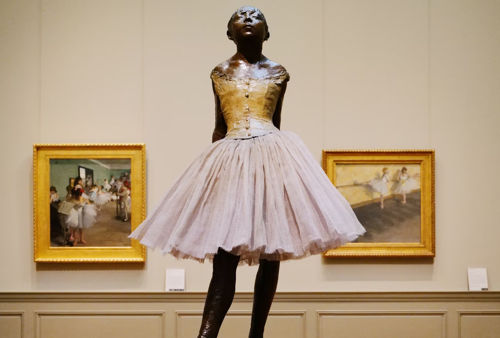
Puede que conozcas la famosa "Pequeña bailarina de catorce años" de Edgar Degas, pero ¿Conoces a la persona que inspiró la escultura? Su nombre es Marie van Goethem. Marie era hija de una lavandera y un...
Art Supplies / Oil Paints / Brushes / Watercolors / Canvases & Papers / Prints / Books / Gifts
Estamos ahi, igual que tu !


 Sumérgete en un viaje emocionante donde la creatividad y la belleza artística se fusionan para dar vida a narraciones atemporales que siguen cautivando al mundo moderno. Desentrañamos los secretos ocultos detrás de estas obras icónicas y te llevamos en un recorrido único por la intersección entre mitología y genialidad artística.¡Déjate inspirar por la riqueza cultural que perdura a través de los siglos !
