
Select your language

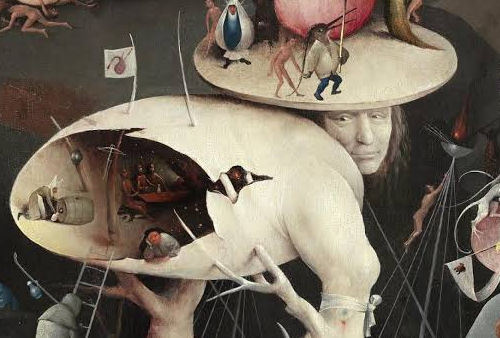
Long before horror films coined the term "gore," painting had already explored that uncomfortable territory where death, violence, and the grotesque coexist. From medieval visions of hell to Romantic nightmares, some of history's most celebrated artists chose not to look away from what most people prefer to avoid: the wounded body, decaying flesh, the exact instant of death.
Read more … Gore Art: When painting dared to look horror in the face.

Some paintings explain themselves. Others, the more you look at them, leave more questions open. "The Meeting on the Turret Stairs" belongs to the second kind. At first glance it is a quiet scene: a man and a woman embrace on a stone staircase, her eyes closed, his lips resting on her arm.
Read more … The Meeting on the Turret Stairs: A Ballad of Love
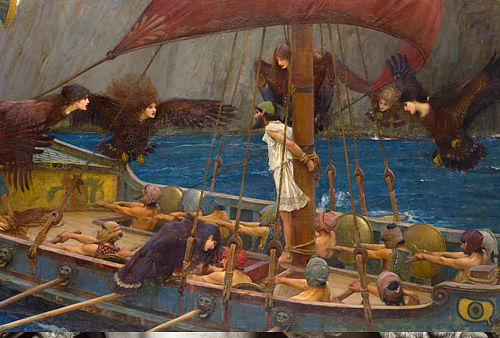
Some scenes from Greek mythology seem to have been made to speak about something that keeps happening thousands of years later. Ulysses facing the sirens is one of them. John William Waterhouse painted it in 1891, at one of the most interesting moments of his career, and the result is a strange, unsettling image: a man tied to the mast of his ship while creatures with female faces, bird bodies and enormous claws surround him.
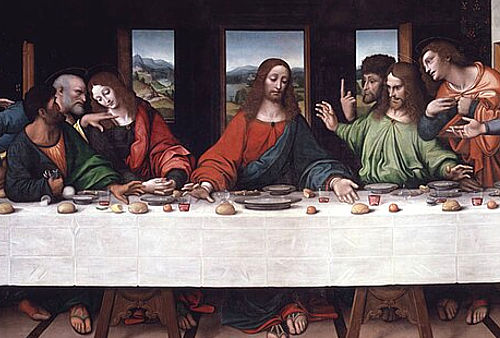
There are thirteen people around a table. No one has stood up yet. No one has fully reacted. But a single sentence has just changed everything: "One of you will betray me." Leonardo da Vinci did not choose to paint the betrayal itself. He chose to paint the instant immediately after: the exact second in which twelve men hear something they never expected to hear.
Read more … Everything Happens At This Table | The Last Supper by Leonardo Da Vinci
Page 5 of 15
Estamos ahi, igual que tu !


 Sumérgete en un viaje emocionante donde la creatividad y la belleza artística se fusionan para dar vida a narraciones atemporales que siguen cautivando al mundo moderno. Desentrañamos los secretos ocultos detrás de estas obras icónicas y te llevamos en un recorrido único por la intersección entre mitología y genialidad artística.¡Déjate inspirar por la riqueza cultural que perdura a través de los siglos !