
Select your language

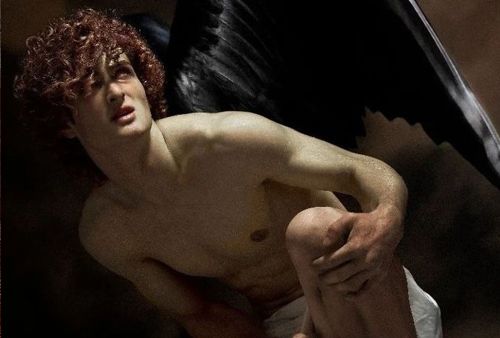
The story of Lucifer, the most beautiful angel in the heavens, has fascinated humanity for centuries. It is a tale that crosses the boundaries between mythology, theology, and philosophy, describing the terrifying power of a light that, by its own will, turns into darkness. This myth is not merely a chronicle of betrayal and pride; it is a perennial warning about the consequences of immoderate desire and the fragility of perfection when it encounters hubris.
Read more … The Banishment of Light: The Fall of Lucifer and the Aesthetics of the Abyss
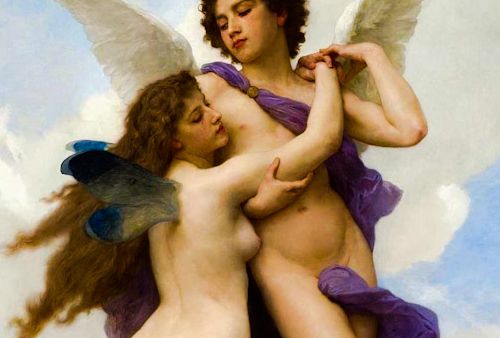
On other occasions, we have published works that speak of Psyche and Cupid. Today we bring you this series of paintings by William-Adolphe Bouguereau that represent different moments of the myth. Psyche was the youngest daughter of the King of Anatolia; her great beauty was so famous throughout the kingdom that men adored her as a new Aphrodite, forgetting the altars of the true goddess. This involuntary cult sparked the wrath of the deity of love, who could not allow a mortal to compete with her radiance.
Read more … Psyche and Cupid: The First Kiss and the Soul's Journey toward Immortality
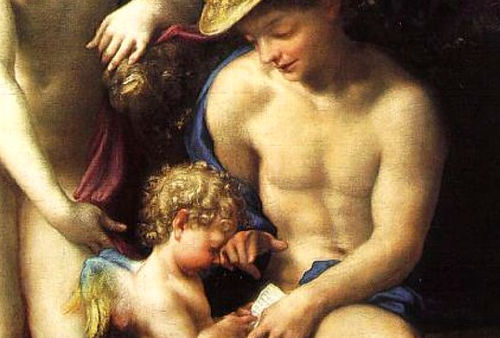
A young family enjoys a tender moment in a lush clearing. Venus, the goddess of love, holds the bow of Cupid, her son, while his father Mercury, the god of wisdom and messenger of the gods, teaches him to read. Mercury looks at his little one with an almost human affection, but Venus breaks the fourth wall: she gazes at us dreamily and smiles, inviting us to be accomplices in this divine domestic scene. Unusually, in this depiction, Venus is shown with wings, a detail that has puzzled and fascinated historians for centuries.
Read more … The Venuses of Correggio: The Eroticism that Anticipated the Rococo
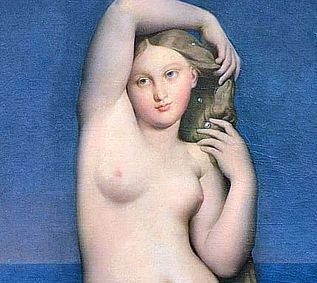
The sea and the foam: two essential elements upon which artistic representations linked to the birth of Aphrodite are based. Throughout the centuries, artists have offered a very free interpretation of the details of the myth, but always returning to that aquatic origin. From this arises the epithet "Anadyomene," which literally means "rising from the breast of the waters." However, it is curious to note that representations staging the violent emergence or the actual movement of the goddess rising are truly rare. Most painters prefer the moment of calm after the storm.
Read more … Venus Anadyomene: The Birth of an Obsession with Beauty
Page 10 of 15
Estamos ahi, igual que tu !


 Sumérgete en un viaje emocionante donde la creatividad y la belleza artística se fusionan para dar vida a narraciones atemporales que siguen cautivando al mundo moderno. Desentrañamos los secretos ocultos detrás de estas obras icónicas y te llevamos en un recorrido único por la intersección entre mitología y genialidad artística.¡Déjate inspirar por la riqueza cultural que perdura a través de los siglos !