
Select your language


Do you really think social media invented scandals and gossip? Of course not! In the 18th century, they were everywhere, and this masterpiece by Jean-Honoré Fragonard is the perfect example that the French aristocracy knew exactly how to have fun (and how to hide it). Life is Art, but sometimes, art is the evidence of the crime.
Read more … The Secrets of Fragonard's The Swing: A Masterpiece for Scandal

Among all the disturbing images that Francisco de Goya painted at the end of his life, few are as unsettling as The Witches’ Sabbath. There is no heroism, no classical beauty, and no decorative intention. There is fear, superstition, and an uncomfortable feeling: the sense of looking at something that was never meant to be seen.
Read more … Goya’s Witches’ Sabbath: An Allegory of Power in the Shadows

Before Goya painted horror, horror already existed. It lived in myths, in the stories ancient civilizations used to explain the unexplainable: time, violence, power, and the fear of losing it all. Saturn —Cronos to the Greeks— was not a monster. He was a god. The god of time. And like every god who rules over something that cannot be stopped, he was condemned to paranoia.
Read more … Saturn Devouring His Son: When Myth Stops Being a Myth
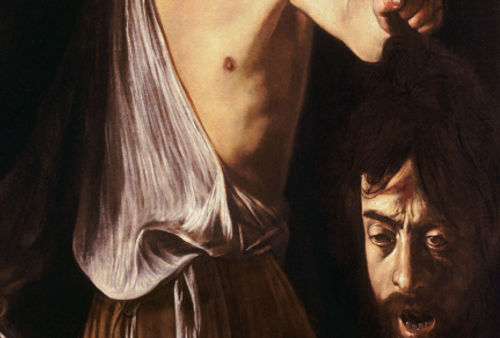
La oscuridad no era para Michelangelo Merisi da Caravaggio una simple técnica pictórica; era su refugio, su condena y, finalmente, su propia piel. En el ocaso de su vida, acosado por sus demonios internos y por la justicia de los hombres, el genio del tenebrismo nos entregó una de las piezas más perturbadoras y lúgubres de la historia del arte: David con la cabeza de Goliat. Pero tras la superficie de este lienzo barroco no solo hay pintura, hay una confesión de asesinato bañada en sangre y sombras.
Read more … The Murderer's Head: The Bloody Secret in Caravaggio's Final Self-Portrait
Page 8 of 15
Estamos ahi, igual que tu !


 Sumérgete en un viaje emocionante donde la creatividad y la belleza artística se fusionan para dar vida a narraciones atemporales que siguen cautivando al mundo moderno. Desentrañamos los secretos ocultos detrás de estas obras icónicas y te llevamos en un recorrido único por la intersección entre mitología y genialidad artística.¡Déjate inspirar por la riqueza cultural que perdura a través de los siglos !