
Select your language


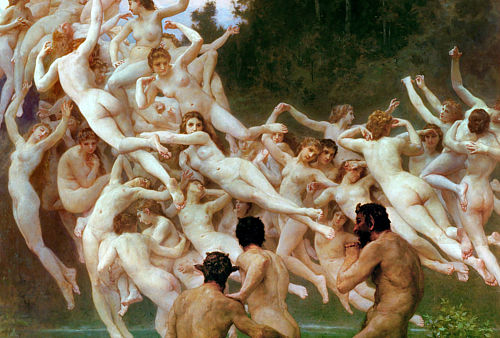
Hades, called Pluto by the Romans, was the god of the Greek underworld, the land of the dead in Greek and Roman mythology. While some modern religions view the underworld as hell and its ruler as the embodiment of evil, the Greeks and Romans saw the underworld as a place of inescapable darkness. Though hidden from daylight and the living, Hades himself was not evil. Instead, he was the guardian of the laws of death, a somber but rigorously just sovereign.
Read more … Dante and Virgil in Hell: From Hades, the Just Sovereign, to Bouguereau's Eighth Circle
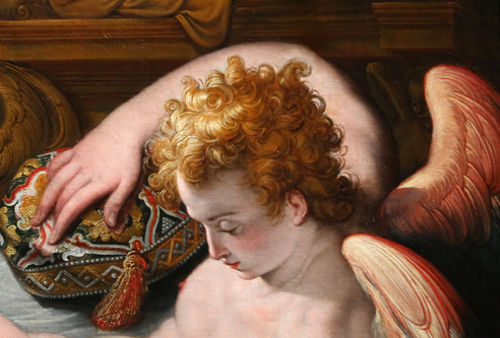
The story of Cupid and Psyche is, perhaps, the most beautiful allegory ever told about the human soul's journey toward immortality. The plot begins with Psyche, a king's daughter, whose beauty was so overwhelming that the people of her kingdom spoke only of her and, in doing so, forgot to follow the cult and adoration of Venus (Aphrodite), the goddess of love and beauty. The goddess, feeling outraged by this rivalry born of mortality, sends her son, Cupid (Eros), the god of desire, to punish the insolent girl.
Read more … Cupid and Psyche: The Soul's Ascent Through Passion and Curiosity
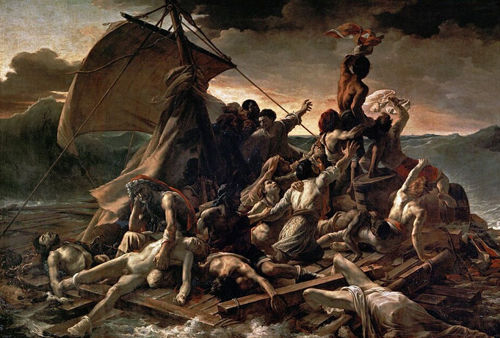
Romanticism, which flourished approximately between the late 18th century and the mid-19th century, was not just an artistic fashion; it was a cultural revolution that encompassed literature, music, and, of course, painting. It was born as a passionate reaction against the cold logic, strict order, and rationality imposed by Neoclassicism. If the Neoclassicists sought perfection in symmetry and the rules of Greco-Roman antiquity, the Romantics sought truth in a much deeper and more turbulent place: sentiment, imagination, and uncontrollable emotion.
Read more … The Roar of Feeling: Exploring Drama, Nature, and Passion in Romanticism Painting
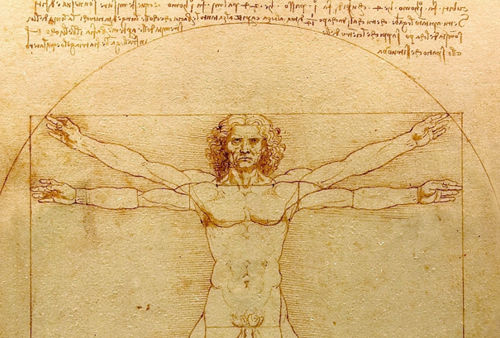
There are universal images that form part of our collective history, and one of the most iconic is undoubtedly Leonardo da Vinci's The Vitruvian Man. This illustration, repeated and reinterpreted throughout the centuries, is much more than a simple drawing: it is a symbol of the intrinsic connection between art, science, and philosophy. Created around 1490, this work reflects not only Leonardo's insatiable curiosity but also his commitment to the search for perfection and the universal laws that govern both the human body and the universe.
Read more … The Divine Proportion: The Vitruvian Man, a Map of Human Geometry and the Cosmos
Page 12 of 15
Estamos ahi, igual que tu !


 Sumérgete en un viaje emocionante donde la creatividad y la belleza artística se fusionan para dar vida a narraciones atemporales que siguen cautivando al mundo moderno. Desentrañamos los secretos ocultos detrás de estas obras icónicas y te llevamos en un recorrido único por la intersección entre mitología y genialidad artística.¡Déjate inspirar por la riqueza cultural que perdura a través de los siglos !